energy

I Love Oil

You know, I really love oil. Not in it’s crudest form, or even gasoline — that nasty stuff you put in your truck, or even in it’s form of energy — that powers my truck. I love it because oil is such a beautiful thing — it takes one to beautiful places, it gives one the most wonderful experiences.

It’s oil that takes me up to the woods. It’s oil that takes me down rough state truck trails and smooth superhighways, the fly high above beautiful valleys. It’s oil that take me to the mountains, it’s oil that takes me out on the town to meet interesting people. It’s oil that goes in the bus that takes me to work. It’s oil (and it’s cousin natural gas) that keeps lights on, the beer cold, and good times rolling on.

Oil Slick on the Hudson River

I love oil, despite my
sometimes troubled relationship with it.

We Need to Balance Climate Change Against Our Needs for Energy Services

Like most Americans, I believe strongly we should do something about Climate Change, to limit it’s most severe impacts. Yet at the same time, I am fully aware of our needs for energy services – the stuff that energy provides for us like lighting, transportation, powering electronics and motors, heating, and cooling. We need a lot of energy too – as I noted when the BP Oil Spill occurred – all the oil that spoiled the ocean could only fuel America for about 45 seconds. Turns out the oil spill severity was much worst then originally predicted, but still it was only one and half minutes worth of petroleum consumption for the United States.

So how do we get there from here? I do not advocate a “crash” diet on petroleum and other fossil fuels. People really like the energy services that fossil fuels provide, and most people aren’t give up their vacations using their petroleum fueled automobiles, or heat and air conditioning in their houses – especially for a “projected” future problem. Electric lighting and computers are essentials of modern life that most people aren’t going to want to give up either. Cities – particularly large cities – have such intense energy needs, that fully substituting with renewables isn’t going to be practical, much less cost effective.

Sure Looks Like Rain

What needs to happen is a big compromise. We need reasonable but strong energy standards that promote and preferable renewables and energy efficiency. Those standards can’t compromise the core things that make up the necessities modern life – including reliable and affordable energy and products. We have to continue to develop fossil energy sources responsibility. At the same time, we need to choose a realistic climate goal that matches our need for energy.

There are those out there that say we can’t afford that much Climate Change destruction. Essentially slaughtering millions of people and destroying billions in property to ensure our society has the energy it needs, really isn’t a pretty choice. But it’s a realistic choice. There is no free lunch on climate change – and protecting all the energy services provides for our society is important. America needs services that energy provides, and it has to be balanced against the painful consequences of consuming that energy.

Today’s debate needs not be whether we will need fossil energy to provide for energy services we all depend on and deeply enjoy. We will need fossil energy for the foreseeable future – and probably more of it in coming years. The question is can we burn it cleanly, and efficiently so it provides the most energy services for the least amount of actual fossil energy consumed. We got to take the oldest and dirtiest power plants and replace them with modern technology. We also got to boost renewable energy to be the preferred source of energy whenever it’s reasonably cost effective.

Japan’s Rebirth May Save the Planet

Japan’s partial meltdown and destruction of three or more nuclear reactors at the Fukushima I Power Plant may finally force the world to rethink it’s energy policies. Japan’s future relating to these destroyed nuclear plants looks grim, with a great possibility of that at least some nuclear plant operators will die, and other residents around the plant will die slow and horrific deaths from cancer. Crops will be contaminated and animals will get sick and die. Nuclear radiation is nasty stuff.

Much of Japan’s recent history is surrounded by tragic consequences of Hiroshima and Nagasaki bombings, that not only killed thousands upon their initial explosion, but killed thousands more in the following years as the doses of radiation stimulated cancers and caused miscarriages. While the dropping of the atomic bomb and the lives it took is a distance memory, and evil potentially just as great if not greater has been unleashed over Japan. There ought to be a realization that the nuclear age must end.

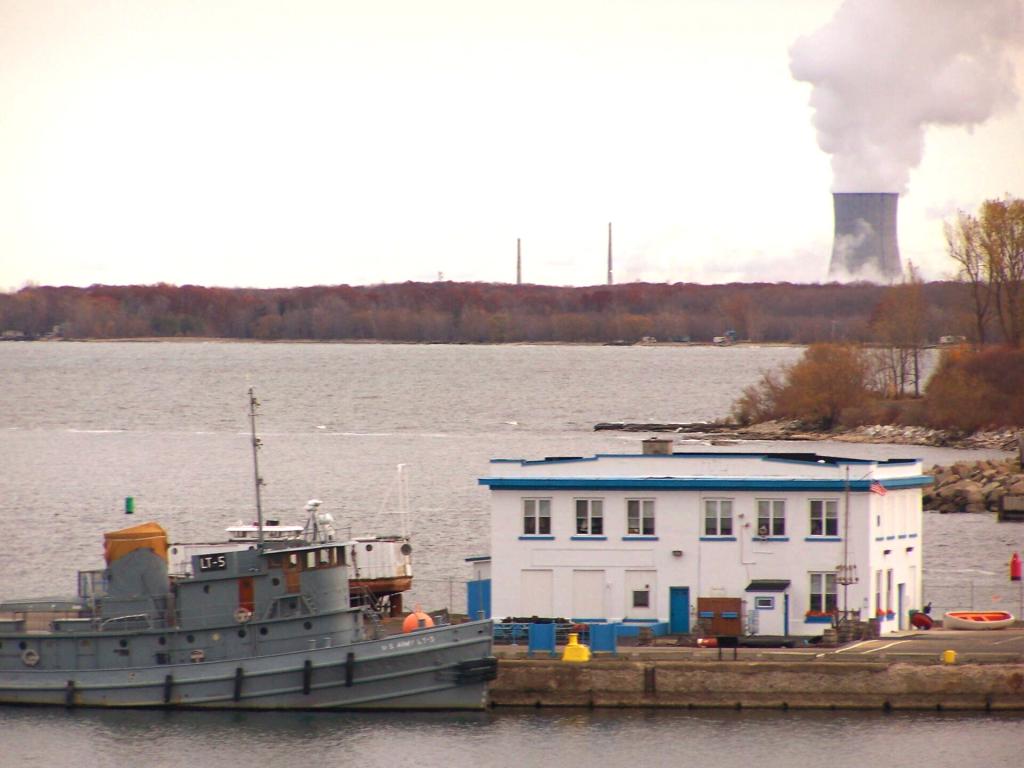
Tugg Boat and Nuclear Plant

The Japanese are certain to search for new energy sources to replace these existing nuclear plants. While Japanese are ready adopters of high technology, they are certainly are now aware of dangers of nuclear power and are going to want to shy away from it. Being an island nation, and being so aware of the dangers of climate change, they probably are not going to welcome in a large coal or natural gas plant that produces large carbon emissions to replace the now destroyed and forever unusable nuclear plants. Likewise, Japan has to import almost all of it’s fossil energy, so becoming more dependent on fossil fuels is a recipe for economic stagnation.

What can Japan do to replace these destroyed power plants? It’s not clear, although the unconventional alternatives to new fossil and nuclear generation seem likely. Japan can go on a massive campaign to reduce electricity consumption and build out renewables. They can build a smarter grid, where appliances reduce their electrical load automatically to ensure a need for less surplus capacity. They can make massive investments in renewable energies like off-shore wind and wave turbines. They can require buildings to have solar cells. They can make saving electricity a national priority.

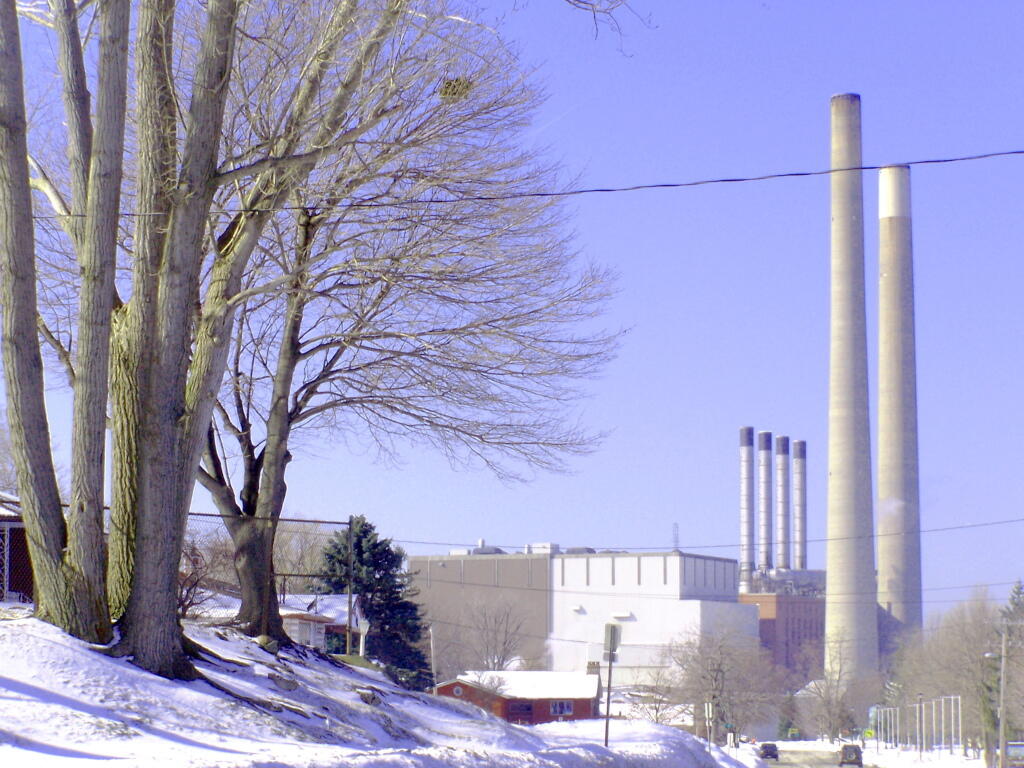
Power

Japan may have the chance to build the energy infrastructure only dreamed and theorized by Climate Activists in other countries. Yet, if Japan can do it, other countries will not be far behind in copying their successes. Whatever Japan does to rebuild will be an indication for energy industry of the future.

Legitimate $$ Free MONEY $$ (Not a Scam)

Ever wonder how you can make significantly more money, with minimal effort? There is a great “Work from Home Opportunity” that can save you a lot of money, if you only choose to:

  1. Do some pretty simple math (optional).
  2. Flip some switches.
  3. Unplug some appliances.

How do you get this free money? Very simple. It’s lying around in your home, in almost invisible locations. It takes almost no effort. It’s what people have been telling you for years, but you’ve not been listening.

It’s called conserving energy!

Wow. Now for the math part, to calculate how much you can save in electricity by taking some really simple steps.

Step 1: Realize There Are 8,760 hours in a Year.

That is a pretty big number. While most of us think of their being 24 hours in a day and 365 days in a year, we rarely multiply both numbers together. Yet, we should when talking about energy, because we use energy like electricity even when we sleep or at out of the house.

Step 2: Realize Electricity Is Sold in Very Small Bundles.

That is compared to typical household electrical consumption. Power companies bill you on kilowatt hours. So if you use on average 1,000 watts per hour, you use 8,760 kw/h of electricity per year.

The way electricity is priced is similiar to a grocery stores selling food “by the teaspoon”. Shelve prices at such a “by the teaspoon” grocery store might look cheap, but when you get to the register, you would be shelling out some real cash.

Step 3: Realize Electricity Only Looks Cheap.

Electricity where I live costs about 15 1/2 cents per kilowatt hour. Seems pretty cheap. You could use 9,600 watts for an hour, for the same price of a $1.50 bus pass. That’s more energy then your electric clothes drier would use in an hour.

The problem comes in that most people don’t use electricity for an hour. They use it for multiple hours, indeed throughout the year, all 8,760 hours of the year. While people turn appliances on and off, the reality is a lot of electricity is being used year round.

Step 4: Calculate Your Savings.

Once you realize how expensive energy is, the trick is to calculate your savings and figure out where you can spare a couple of watts here and there. Maybe unplugging the television when your not using it rather then putting it in sleep mode, could save you $5 or $10 a year, making sure the computer is turned off when your not using it, could be another free $50-$75 in cash that otherwise would have just gone to power company.

This table looks a that math, based on the typical 15.5¢ an Albany resident would typically pay for electricity. Evidentially, even that little amount adds up. Do you really need that extra alarm clock? Unplug it! That’s another free $8.15 per year in Albany. Replace that 100-watt incadescent bulb you use on average 6-hours per day with a 26 watt florescent equalivent bulb, and get a free $16.75 for each bulb you change per year.

Typical Monthly Energy Costs in Albany-area.

Can you turn some of the below appliances off? How often do they stay on, wasting energy? This is how much you’ll save in energy in Albany.

Appliance Energy Rating in watts 1 hour per day 2 hours per day 4 hours per day 6 hours per day 12 hours per day 24 hours per day
LED Night Light 0.5 $0.00 $0.00 $0.01 $0.01 $0.03 $0.06
LED Christmas Lights 4 $0.02 $0.04 $0.08 $0.11 $0.23 $0.45
Regular Night Light 5 $0.02 $0.05 $0.09 $0.14 $0.28 $0.57
Clock Radio/Alarm Clock 6 $0.03 $0.06 $0.11 $0.17 $0.34 $0.68
60 Watt Equivalent CFL 13 $0.06 $0.12 $0.25 $0.37 $0.74 $1.47
Desktop Computer (Sleep Mode) 15 $0.07 $0.14 $0.28 $0.42 $0.85 $1.70
100 watt Equivalent CFL 26 $0.12 $0.25 $0.49 $0.74 $1.47 $2.94
36 in Ceiling Fan (High) 55 $0.26 $0.52 $1.04 $1.56 $3.11 $6.22
60 Watt Incadecent 60 $0.28 $0.57 $1.13 $1.70 $3.39 $6.79
Laptop Computer 80 $0.38 $0.75 $1.51 $2.26 $4.53 $9.05
100 watt Incadescent Bulb 100 $0.47 $0.94 $1.89 $2.83 $5.66 $11.32
Refrigerator (Average) 100 $0.47 $0.94 $1.89 $2.83 $5.66 $11.32
Desktop Computer 150 $0.71 $1.41 $2.83 $4.24 $8.49 $16.97
Xbox 360 185 $0.87 $1.74 $3.49 $5.23 $10.47 $20.93
PS3 194 $0.91 $1.83 $3.66 $5.49 $10.98 $21.95
50 in LCD Television 250 $1.18 $2.36 $4.71 $7.07 $14.14 $28.29
50 in Plasma Televison 300 $1.41 $2.83 $5.66 $8.49 $16.97 $33.95
Medium Electric Space Heater 900 $4.24 $8.49 $16.97 $25.46 $50.92 $101.84
Window AC Unit 900 $4.24 $8.49 $16.97 $25.46 $50.92 $101.84
Coffee Maker 900 $4.24 $8.49 $16.97 $25.46 $50.92 $101.84
Electric Oven 2000 $9.43 $18.86 $37.72 $56.58 $113.15 $226.30
Washing Machine 3800 $17.92 $35.83 $71.66 $107.49 $214.99 $429.97
Electric Clothes Drier 9000 $42.43 $84.86 $169.73 $254.59 $509.18 $1,018.35

Typical Yearly Energy Costs in Albany-area.

Now if you think you can’t make some real savings in a month, consider the power consumption for these common items over a year.

Appliance Energy Rating in watts 1 hour per day 2 hours per day 4 hours per day 6 hours per day 12 hours per day 24 hours per day
LED Night Light 0.5 $0.03 $0.06 $0.11 $0.17 $0.34 $0.68
LED Christmas Lights 4 $0.23 $0.45 $0.91 $1.36 $2.72 $5.43
Regular Night Light 5 $0.28 $0.57 $1.13 $1.70 $3.39 $6.79
Clock Radio/Alarm Clock 6 $0.34 $0.68 $1.36 $2.04 $4.07 $8.15
60 Watt Equivalent CFL 13 $0.74 $1.47 $2.94 $4.41 $8.83 $17.65
Desktop Computer (Sleep Mode) 15 $0.85 $1.70 $3.39 $5.09 $10.18 $20.37
100 watt Equivalent CFL 26 $1.47 $2.94 $5.88 $8.83 $17.65 $35.30
36 in Ceiling Fan (High) 55 $3.11 $6.22 $12.45 $18.67 $37.34 $74.68
60 Watt Incadecent 60 $3.39 $6.79 $13.58 $20.37 $40.73 $81.47
Laptop Computer 80 $4.53 $9.05 $18.10 $27.16 $54.31 $108.62
100 watt Incadescent Bulb 100 $5.66 $11.32 $22.63 $33.95 $67.89 $135.78
Refrigerator (Average) 100 $5.66 $11.32 $22.63 $33.95 $67.89 $135.78
Desktop Compuer 150 $8.49 $16.97 $33.95 $50.92 $101.84 $203.67
Xbox 360 185 $10.47 $20.93 $41.87 $62.80 $125.60 $251.19
PS3 194 $10.98 $21.95 $43.90 $65.85 $131.71 $263.41
50 in LCD Television 250 $14.14 $28.29 $56.58 $84.86 $169.73 $339.45
50 in Plasma Televison 300 $16.97 $33.95 $67.89 $101.84 $203.67 $407.34
Medium Electric Space Heater 900 $50.92 $101.84 $203.67 $305.51 $611.01 $1,222.02
Window AC Unit 900 $50.92 $101.84 $203.67 $305.51 $611.01 $1,222.02
Coffee Maker 900 $50.92 $101.84 $203.67 $305.51 $611.01 $1,222.02
Electric Oven 2000 $113.15 $226.30 $452.60 $678.90 $1,357.80 $2,715.60
Washing Machine 3800 $214.99 $429.97 $859.94 $1,289.91 $2,579.82 $5,159.64
Electric Clothes Drier 9000 $509.18 $1,018.35 $2,036.70 $3,055.05 $6,110.10 $12,220.20
Map: Slader Creek State Forest
Map: Tupper Lake (North)

Oil on the Brain

Lisa Margonelli’s Oil on the Brain is a book that looks at the supply chain of gasoline from gas station to refinery to the oil well. While it briefly mentions natural gas wells and touches on other petroleum products, it’s main focus is on the supply of gasoline. It tells a straightforward, but unremarkable story. Most of the things you read about in the book, you already knew about from commonsense before you open the book.

You might suspect that such a book would take on an activist character and point out all of the evils of the oil industry. Or that the book would pass judgment on those who drive big gas guzzling cars. It does neither. It just lays out the struggles faced by the gas stations squeezed both by the oil companies and market forces, the difficulty of getting the fuel at a reasonable price just-in-time at the gas stations, the pollution problems at refineries, the all powerful NYMEX crude market that make people rich and broke in seconds, and the third world countries that suffer when poorly run oil wells pollute the landscape and leave them impoverished.

Oil Slick on the Hudson River

The thing is we all know such things. Most people are aware at some level the troublesome nature of petroleum, and how it pollutes. They realize that many of the refineries are older, polluting, and suffer many malfunctions that spew toxins into the air. Yet, modern society accept those costs are being acceptable. Non-environmentalists might not express such concern, but they hang over our heads and there is a certain public awareness.

Most interesting in the book was how Lisa Margonelli got exclusive access to the Strategic Petroleum Reserve, the NYMEX market, oil refineries, gas stations, and oil wells. She talked to the people, she captured the culture surrounding it. She didn’t villinize any one sector, but instead sought to shine light on this important industry that provides both energy and a major source of pollution.

An interesting book well worth a read.