Country Life 📍

📽️ Videos

How tiny of a cabin

I am reading Charlie Wings’ The Tiny House Handbook. So much of the book is about tiny houses, as the name would suggest. I find tiny houses appealing though maybe not quite as small as the sub 400 square foot designs, especially those designed to be towed, suggest in much of the book.

Is a tiny home really a home, if it’s designed to be towed? In my mind such a structure is a trailer with a lot of things economized to fit the dimensions and weight limits of the road. The same can be said about many pre-fab structures. There is a lot of benefits to building a structure remotely in a warehouse or a factory – but also disadvantages of weight and size limits on what can be towed on the road, especially to remote sites.

At the same time, something on wheels or constructed off site seems to lack permanence. Truth is no building is permanent though there are many very old buildings still in active use. Obviously that is the most sustainable option. But it’s hard to see the plastic and plywood buildings that dominate the suburbs today having much permanence. Maybe an old house is better – if it hasn’t been hauled off to the local dumping grounds yet – then they must have done something right building it.

Building science is both fascinating and infuriating in my mind. Builders have many good ideas, they know what works and doesn’t. Durable materials aren’t always sustainable or easily disposed on site by burning or burying due to the toxic compounds used in them to provide a long life. Neighbors growing up when they got their new double wide to replace their old trailer burned the debris vinyl , siding scraps, waste materials and that sure burnt black and stunk. Decades before the burn ban! Wood just seems like a better option even if it involves covering it with toxic stains and paints.

I read a lot about sustainable building but I’m not sure what is real and what is woke glossy marketing. The sustainability community sure likes their toxic materials that maximize energy efficiency a lot. Even if it keeps drafts from leaking out, vinyl hardly seems like a good material to be using in building any more than the absolute necessary. What is going to happen to the vinyl eventually? Be burned? Be pushed back into the earth to leach plasticizers into the earth?

In many ways I do embrace the tiny house movement in that I crave simplicity, something like a very rustic hunting cabin. Something lit by a light bulb hung from a cord in the ceiling, heat by a basic woodstove , maybe no inner walls at all, just a simple brass or wooden bed like you might find in an institutional setting. For cooking, a simple camp stove or maybe upgrade to a small, old used gas oven converted to propane. Inexpensive electric refrigerator and freezer like everybody else has powered by solar. Outside shower and outhouse. When it’s too cold to crap outdoors a bucket works to be dumped in the poop hole. Rather than sending all that shit to the landfill.

Truth is that I hate how wires are hidden and even things like garbage cans are hidden in people’s houses. Heat comes from an invisible source, water is pumped in then disappears down a drain to a leach field or sewer with all the scum being collected to be eventually dumped in the landfill. I get how infrastructure is necessary but I hate how it’s all so hidden. If we could only go back to the way it was done 120 years ago, out in the country.

Map: Spruce Knob Mountain
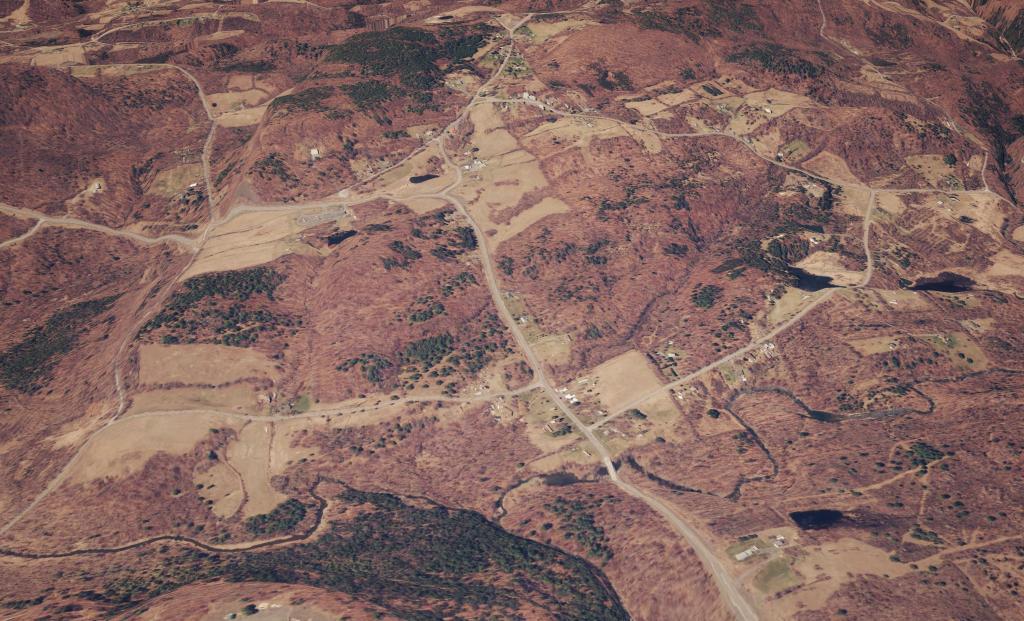
Terrain Map: Kingston and Catskill Mountains

Good things come to those who wait ⏳️

I am often reminded of back in 2009 and 2010 when I started looking at replacing my Ford Ranger with a bigger, newer truck. I decided to hold off a few more years and was able to get a nicer truck with more money saved, and relatively low prices due to do the recession. I had originally looked at getting a stripped down work truck or something used, but I decided to throw some more money at the Ford Ranger, and keep it on road for a few more years, despite pushing over 140k miles and needing more parts and repairs. But I ended up getting Big Red, and then lifting it with a 6-inch lift during the beginning of 2015.

I so want to buy a house, and I’ve been looking but I concede I don’t want to buy or build in New York State if I can avoid it due to the gun laws and burn ban. Plus most of the houses locally are your run of the mill, plastic-coated, vinyl-sided suburban houses with gas heat and grid-tied electricity on a tiny piece of land. There are a handful of rural houses that pop up on the market, but they are mostly a variation of the suburban house some in neighborhoods that smell like cow shit with a longer commute. But if I hold out for a bit longer until I’m 55, I know I can have something much better.

I’ve been watching how much battery, inverter and solar technology has improved over the past decade, and it’s truly remarkable. With advanced electronics and LiON batteries – it’s such a different world then old fashioned lead acid batteries and old-style MPPT controllers like Midnight Solar ones. It’s only going to get better and cheaper in the next decade. Combined with more money saved, I can build or rebuild really the ultimate off-grid homestead that I actually want, not some crap suburbanite-lite house with a big blue bin and grid-tied solar panels on the roof and Tesla Swastika-Car on driveway. I don’t have to stay in Albany or New York forever, if I don’t buy here but just focus making through age 55.

I grew up on 4.8 acres of land in Dormansville … 🚜

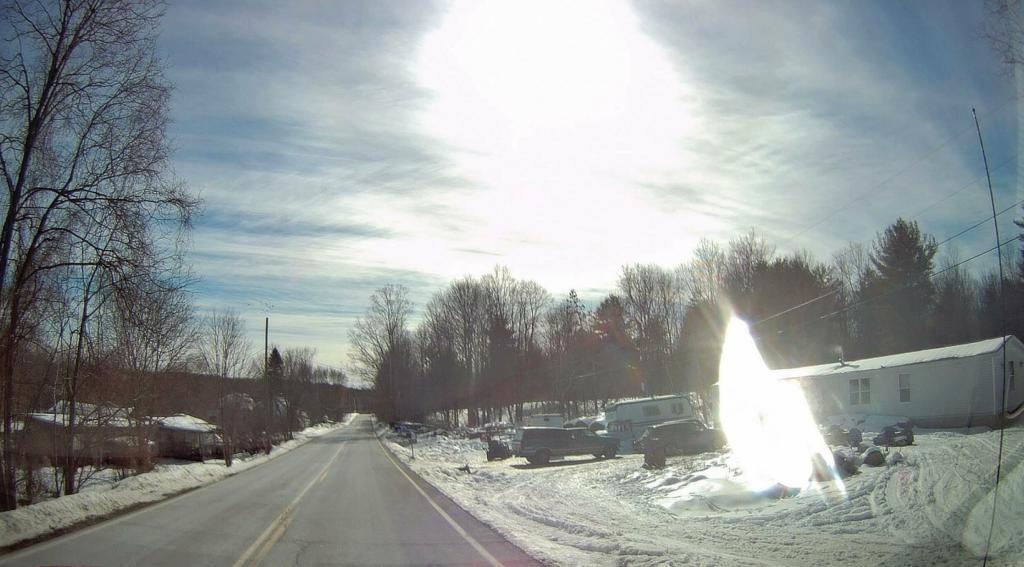
Neighborhood I Grew Up

That probably seems like a lot to the city or village dweller, but it’s really not compared to many other parts of country. It means having neighbors nearby and having restrictions on your freedom as your neighbors are close enough to hear you shooting your guns, smell your livestock and burn barrel. Or smelling their hogs or poop-filled diapers in their trash fire. Or the pow-pow of their AR-15 or the roar of the pickup truck without a muffler.

When I own my own land, I want have more acreage, less house and material stuff and more freedom to do what I want on my land. Less of a chance to be a nuisance to them, or have to put up with their nuisances that come along with rural life and freedom to live one’s life as you should. Land is expensive, but the farther you are out in the country, the cheaper it is. And if you give up a nice house for a shed-to-cabin or a trailer, you can afford much more land that can provide a buffer from between you and the neighbors. Live and let live.

Dormansville

Previously Used Lands Can Revert to Wilderness

One of the claims sometimes made is that previously industrialized or man made landscapes can not ever be reversed into wilderness. It is claimed that once man touches a landscape, mines, farms, or timbers it surface, it can not ever revert back to a natural status.

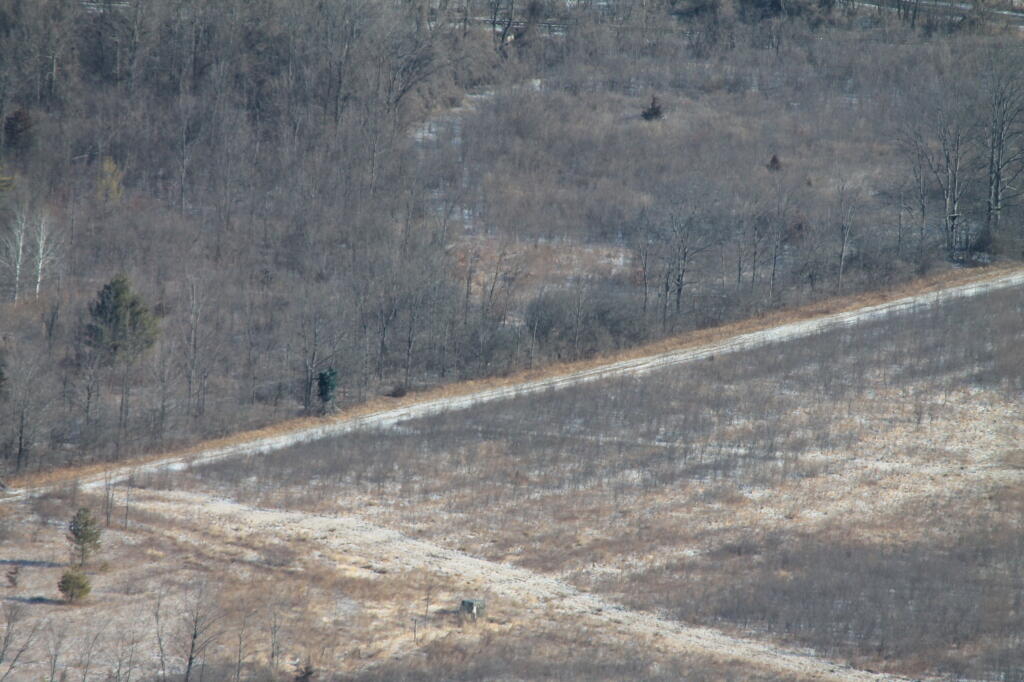
Grown Up Farm Field

The reality is that is far from that.

Man made works, while remarkable, quickly start to fall down and revert back to a more natural status, quickly after abadonmnet. Certainly man is powerful, can move large mounds of earth, and bring materials from far away. Yet, as soon as man walks away, plants start to grow into cracks, water erodes roadways and causes buildings ot fall apart, and animals start to return to recolonize a land once dominated by man.

Fragmentation and private inholdings can make it more challenging for abandoned lands to revert back to wilderness. Any attempt by man to upkeep man’s works, will prolong their existence. Man can fight the natural forces through his active stewartship of his products, and through design, but he can not stop nature’s processes once underway, by simply standing on the sidelines.

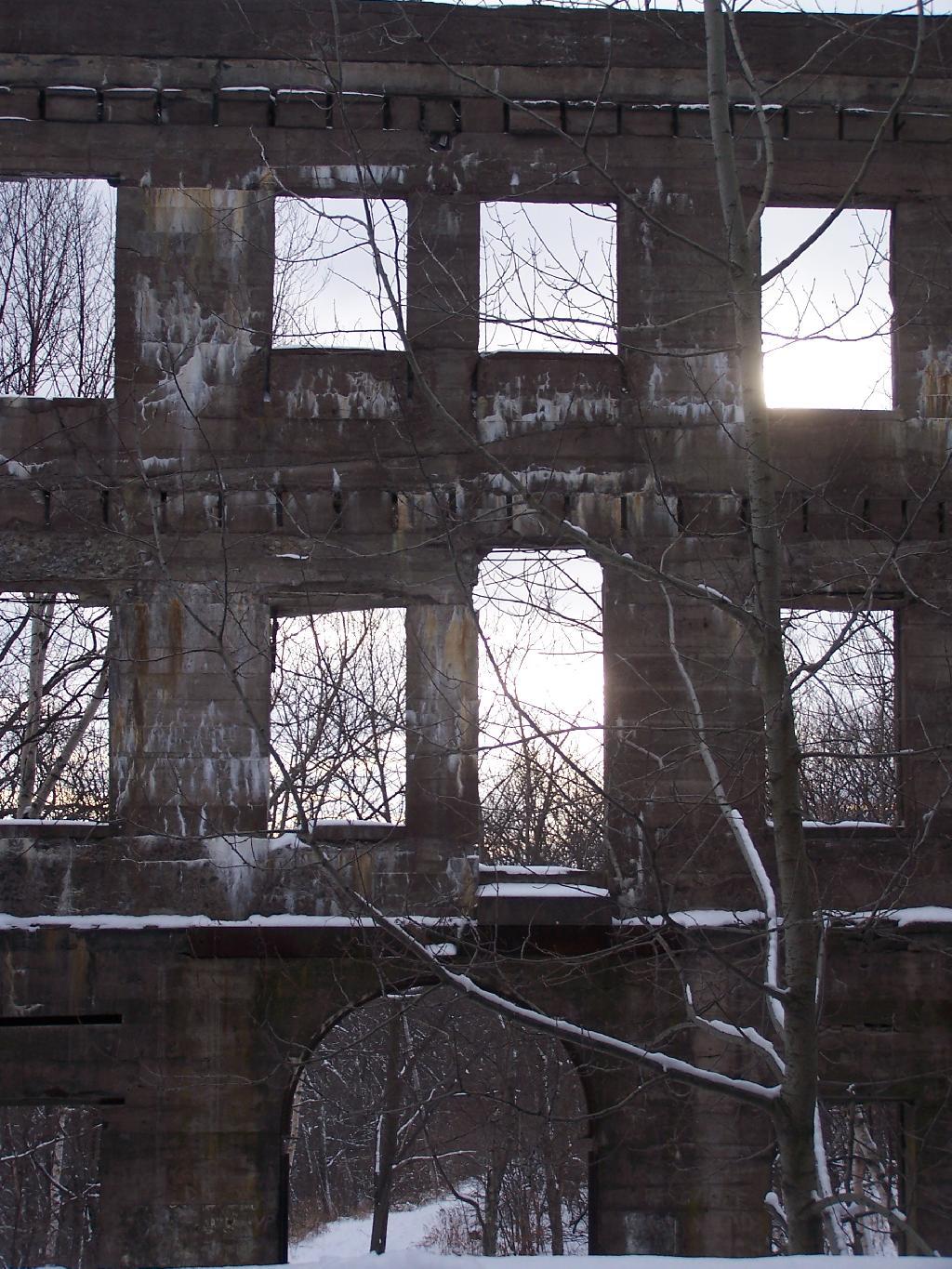
Sun Filters Through Mountain House

Buildings make take decades to fall in and rot away in soil. The lost of old growth timber might take hundreds of years to be replaced. Eroded soils, rock cuts might take thousands if not million years to be disolved back into a truly natural state. Yet, still man’s battle against wilderness is only temporary at best, for once man takes his hand of wilderness, it only starts the long path into wildness once again.

Like the rural poor but not really 🐐

Often a lot of internet videos of homesteaders and farmers, have their properties all prettied up for the cameras. The manure piles well hidden, the mud and muck washed away, the pungent smells of life and death not lost in the transmission of the camera’s photos. 

When I was out canvassing in Plattsburgh and surrounding towns like Beekmantown and Peru, I was pretty much in the standard rural/suburbanite neighborhoods with the endless chipboard houses covered with off-white vinyl and colored sand asphalt roofs. Plastic that shows the mud and muck, UV destruction. Same old grid-tied houses, with weekly garbage hauling, flush toilets going to sewage or septic tank with the poop and paper stored for landfill disposal. Some considered by those to be modern suburban houses, others rundown old trailers. But not really homesteads with goats, hogs, sheep or cattle even if at times the tangy smell of manure hung over the air from nearby dairies which are out spreading this time of year with the corn chopped.

To be fair, the neighborhoods I was walking were walkable and suburban or rural villages. Or trailer parks. They were the places where Democrats live who have priorities besides keeping their guns and being left alone with their livestock and trash fires. Many did have wood stoves, and there was the occasional “modern” log house, and I saw actually quite a nice one out on Cumberland Head with a steel roof, still hardly the backwoods off-grid cabin I toured back in college many years ago, when people were still using lead acid batteries, compact florescents and those big old Outback Inverters with separate charger controllers, and solar was still expensive and boutique technology. I know such places exist in the Greater Plattsburgh, but I wasn’t going to visit such places in search of Democrats. Most of those places are really in the backwoods, up in hills in the remote parts of Altona, Blackbrook, Dannemora, and other towns well hidden from the road.

I get it’s New York State with the burn ban, and I was never in a real rural area. And I do know those places exist,  even if they aren’t as common as the places that fill your Zillow feed, at least until you disable that program on your phone. No everything is that typical vinyl commercial crap, sold as beautiful, colorful and sometimes sustainable plastic even when it’s not. But most of what I saw was a mixature of wealthy houses along the lake, very suburban neighborhoods, and trailer parks – which very much had the big televisions, high-speed internet, weekly trash pickup and just as much junk as the wealthy residents.

I do romanticize a lot about the nobel savage, as if most of the poor lived on homesteads without overflowing weekly trash baskets full of plastics, where houses weren’t wrapped in plastic, where processed food wrapped loaded with saturated fat and sugar in colorful packaging wasn’t the dominant form of sustenance. Places that might smell of manure or burnt plastic occasionally, but are vastly more sustainable than those with weekly trash service and unlimited coal and gas fired electricity. Where the poor eat real food, because they had no other option, as they couldn’t afford the cheap crap constantly being forced down our throats by the advertisers. Where toxic vinyl wasn’t the norm, where wood and logs weren’t seen as too quaint even for the rural home. Where people have land, where whatever nuisance they create by everyday living has basically no impact on anyone else. There is some of that town in the of Plattsburgh but not really.

Terrain Map: Mahanoy Mountain
Map: Tenant Creek Falls Trail