What killed my Michigan Trip for this year
I officially called off the trip to Michigan. The breaking point wasn’t the destination—the appeal of the Nordhouse Dunes and Upper Peninsula remains as strong as ever—but the brutal logistics of getting there. Map it out, and the leg from my planned first-night stop in Chautauqua County up to the dunes is over 500 miles and eight hours of relentless driving. To break it up, I would have had to overnight at some crowded, standard campground or a sterile motel. I had zero interest in doing that, let alone doing it twice, coming and going.
An eight-hour haul sounds reasonable on paper until you zoom in on the actual route. It means navigating a gauntlet of major industrial cities, fighting gridlock, enduring endless construction bottlenecks, and anticipating the inevitable highway wrecks that turn interstates into parking lots. Add in the required fuel stops for a big truck and basic rest breaks, and a theoretical eight hours easily morphs into a stressful, full-day marathon. I value quiet back roads and open space; white-knuckling my way through urban traffic congestion is the exact opposite of why I head into the wilderness.
Then there was the sheer financial weight of the fuel. Based on real-world driving experience, I know the SuperDuty can pull roughly 500 miles on a single tankful on the interstate. But pushing it right down to the last two gallons means burning through 32 gallons of fuel. At $5 a gallon, that is $160 gone in less than a day. For a while in June, Midwest refinery shortages threatened to push prices closer to $6 a gallon, which bumps a single fill-up to $192. I had estimated a total fuel budget of around $700, assuming a conservative 15 mpg over a 1,500-mile round trip. In reality, sustained high highway speeds and crawling along rough backcountry dirt roads would likely drop my economy and push that number even higher. Sure, I make good money, and because I primarily camp in the backcountry for free, my main expenses are just gas, tolls, and park fees. I’m not one for souvenirs or “nic-naks,” so the money wasn’t the ultimate dealbreaker—but dropping three-quarters of a grand purely on fuel still gives you pause.
What really killed the trip, though, was the clock. The entire timeline was built on a house of cards that collapsed when my new truck cap arrived on June 16th instead of mid-May. That single month-long delay broke my momentum. If the cap had landed on time, I would have spent mid-May moving my batteries and camping gear out of my old lifted truck, Big Red, and getting him on the market to secure the $4,000 to $5,000 he’s worth. I would have spent Memorial Day weekend truck-camping in the SuperDuty, using shorter trips to iron out loose bolts, loose wires, and the inevitable bugs that come with a new setup. I would have had the time to install the CB radio, wire extra power ports into the cap, and fully optimize the entire operation.
Instead, I was forced into a rushed solar install over Juneteenth weekend. I spent those days fighting stubborn old racks, tearing them apart to mount on the new rig, and re-cutting wires. The system wasn’t even fully operational by the end of the weekend. I spent the following week still wiring things up, meaning the first true field test didn’t happen until Independence Day weekend. Predictably, there were bugs and annoyances. While those gremlins are likely fixed now, I am simply not willing to risk a major multi-state transit until I have logged several more trouble-free nights in the rig. Getting stranded in the remote backcountry with a dead battery or broken electrical components is a mistake you only make once.
Lately, it feels like every free hour is consumed by a mounting pile of maintenance. Just last weekend, I was stuck working on my bike after breaking the derailleur and somehow bricking the XY-CD 60 module by aggressively pushing buttons. Combine that mechanical headache with the ongoing chore of detailing and cleaning out Big Red to finally get him listed for sale, and the free time required to properly prep for a massive road trip completely evaporated. The irony isn’t lost on me. I explicitly bought the SuperDuty earlier this year with the Nordhouse Dunes in mind. Big Red had given me fourteen good years, but everything on him had become wobbly and worn out. I simply didn’t trust that old setup to maintain a steady, reliable 70 or 75 mph for hours on end through the urbanized corridors connecting New York to the Midwest.
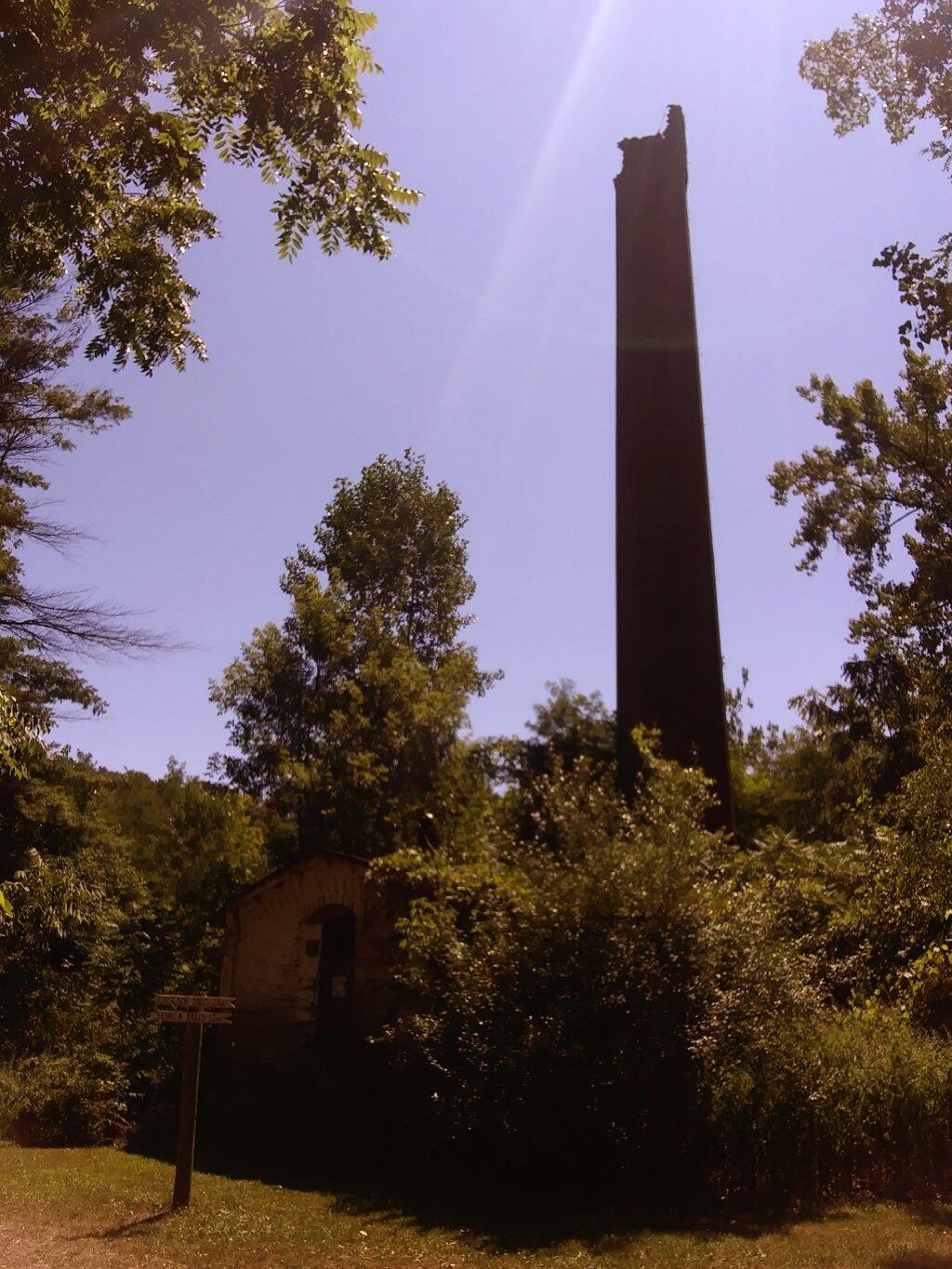
After all the craziness of building the new rig and staring down volatile gas prices, a different kind of summer plan began to make sense. Instead of a massive, multi-state transit, I found myself leaning toward something deceptively simple: the Finger Lakes National Forest. On paper, it sounds like a major step down from the sweeping dunes of Michigan. It is a familiar, predictable choice—even a boring one. But with summer rapidly evaporating and my available time capped at a tight nine or ten days, a low-stakes getaway is exactly what fits the frame.
There is a profound comfort in a trip that requires zero complex planning. I can picture it perfectly: setting up the rig along Chicken Coop Road or Potomac Road, spending the mornings riding my bike down gravel forest service roads, and spending the afternoons doing nothing more demanding than sitting around listening to distant cows chew their cud. It’s a landscape designed for slow pacing—sipping a cold beer, smoking a little dope, and letting the tension of the last few months dissolve. I can spend days relaxing in the glens, walking down Rock Cabin Road, getting a scoop of ice cream at the Watkins Glen Dairy Bar, and cooling off with a swim at the Watkins Glen pool or Seneca Lake. It is the same old boring summer vacation as always, but it leaves just enough room for spontaneous day trips to explore places I’ve missed—maybe tracking down a few new hidden parks and glens, or spending an afternoon across the border in North Central Pennsylvania or Elmira. Maybe summer vacations are actually supposed to be boring, easy, and relaxed, even if they don’t make for high-octane stories.
This shift isn’t a permanent surrender; it’s a postponement. I am absolutely not throwing away the Michigan trip. Instead, I’m eyeing a much cleaner window next year. Assuming family health holds out, the goal is to take a full two weeks off at the tail end of summer—from August 20 to September 6, 2027. Anchored by the Labor Day holiday, that window opens up a full 15-day block, offering the breathing room a true overland expedition deserves, rather than trying to force it into a rushed week this year.
Postponing Michigan also frees up the calendar for a completely different kind of adventure later in the year. Once the summer heat fades and the noise of the 2026 midterm election quiet downs, I am looking toward late autumn. The plan is to take the week of Veterans Day in November to run a true cold-weather circuit through the big woods. I’ll point the SuperDuty toward the Allegheny National Forest, cut south into Ohio to explore the Wayne National Forest—a piece of public land that will be totally new to me—and complete the loop with a few crisp nights high up in the Monongahela National Forest around Canaan Heights before heading back across the New York line. It’s entirely weather-dependent, of course. Early November in those ridges can easily turn overnight, bringing sudden lake-effect bands and blinding ridge-top snowstorms. But that element of unpredictability is exactly what makes an autumn trip feel alive.
The SuperDuty isn’t going to wear out in a single season. The truck sits ready in the driveway, built to last me until my target retirement in 2040 and well beyond. For now, the focus is simple: iron out the bugs close to home, enjoy the quiet of a slow summer, and keep the rig prepped for the long haul.