A History of Cole Hill State Forest
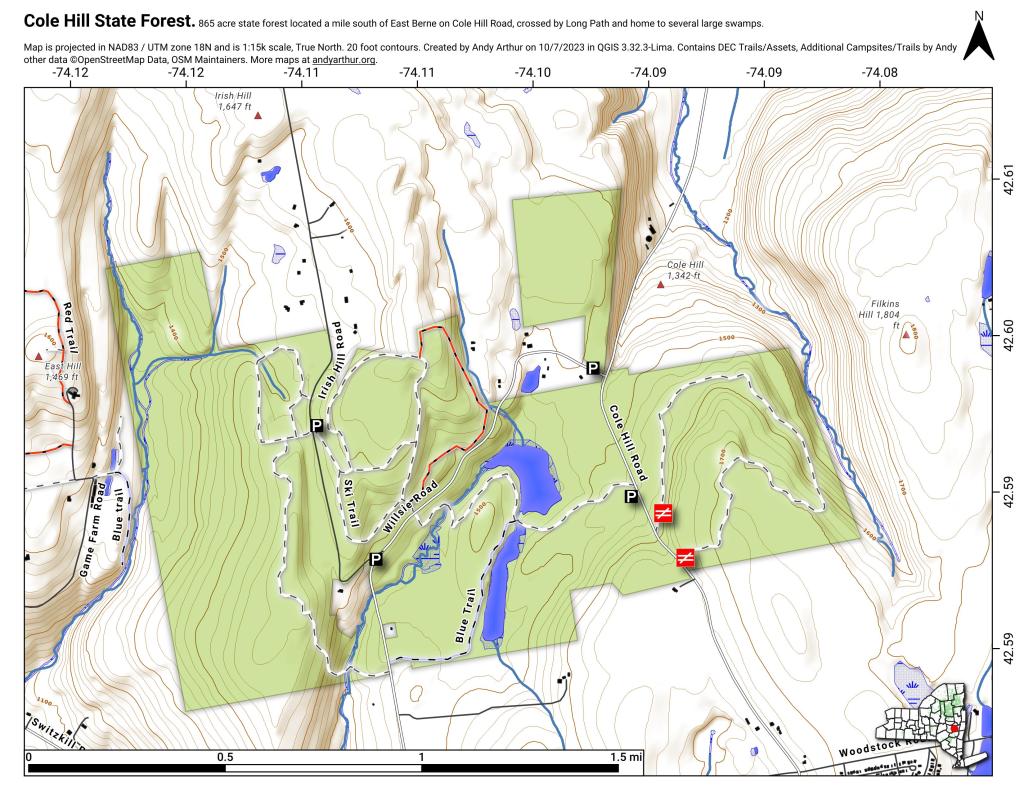
Cole Hill State Forest consists of Cole Hill and Irish Hill, two hills that sit above Berne and East Berne above the Fox Kill Valley. It is lands once used and abused, later restored through the great conservation efforts starting during the times of Franklin Roosevelt and Civilian Conservation Corps. Remnants of its agricultural past, including old stone walls and foundations, can still be spotted along the many trails that traverse these lands.

Before it became public land, Cole and Irish Hills and the surrounding Helderberg region were part of Rensselaerwyck, a massive estate established in 1629 under a Dutch patroonship granted to Kiliaen van Rensselaer. For generations, local farmers did not own their property. Instead, they operated as tenants who paid perpetual, annual rents (often in wheat, livestock, or labor) to the van Rensselaer family.
By the early 19th century, tenant farmers grew tired of these semi-feudal conditions. This simmering resentment boiled over into the Anti-Rent War of the 1840s, a localized rebellion where farmers disguised themselves as Native Americans to resist rent collectors and evictions. The conflict eventually led to the breakup of the manor estates, allowing local families to finally purchase the land outright.

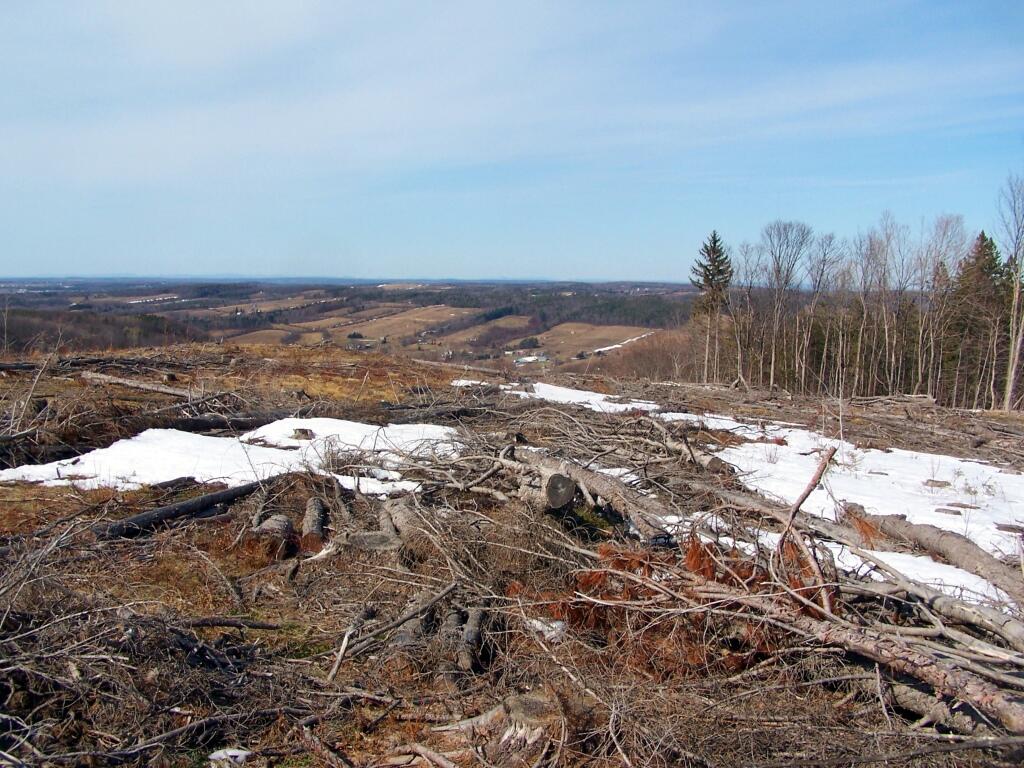
Under economic pressures of the tenant farmer system and later private ownership, the land was aggressively cultivated. Hillsides like Cole and Irish Hill were quickly denuded of trees for sheep farming and other activities, and their shallow soils quickly eroded way. In addition, farmers repeatedly cropped the steep, thin soils of the Helderbergs with buckwheat, rye, and barley. Because the underlying soil was largely glacial till with poor drainage and high acidity, it eroded rapidly once the tree roots were gone. Up to 80% of the hillsides here and in surrounding areas were completely denuded of trees. While the Fox Kill Valley below retained much of its fertile soil deposited by glaciers, these hillsides were quickly stripped down of farmable soil, left with little more then shale outcroppings in many locations.
By the late 19th and early 20th centuries, these “marginal” farms were exhausted and completely unproductive, forcing a massive wave of farm abandonment. During the Great Depression of the 1930s, the federal Resettlement Administration and New York State stepped in to purchase these ruined, tax-delinquent farmlands. The government purchased thousands of exhausted acres across the Helderbergs for as little as $2 to $4 per acre, helping to relocate struggling farming families to more fertile regions. The Civilian Conservation Corps (CCC) and state conservation crews took over the land to reverse the severe soil erosion. They planted millions of conifer seedlings—primarily spruce and pine—across the barren, open hillsides, creating the dense plantations that stand today.

In 1997, Cole Hill was integrated into the Helderberg Bird Conservation Area alongside neighboring properties like the Partridge Run Wildlife Management Area. This 6,594-acre collective habitat safeguards diverse species by maintaining a deliberate mix of regenerating hardwood forests, conifer plantations, wetlands, and old fields.
For more see the Albany Hilltowns History Guide and the Cole Hill State Forest Records on the Altamont Enterprise Wiki.