
I hate political lawn signs
Few things I despise is mass produced political lawn signs 🚧…
Every year for a good portion of the year ugly plastic lawn signs dot communities across the country. These totally meaningless signs that lack any socially redeeming value or have any first amendment protected speech but are simply the commercial brandishing of a candidate for political office’s name.
There is not a single political professional who thinks political lawn signs move anybody in a particular direction when it comes to voting. People either know who they are going to vote for or aren’t going to vote and the signs are visual clutter to be ignored. Door knocks, phone calls and even political mail and targeted social media advertising are much more effective.
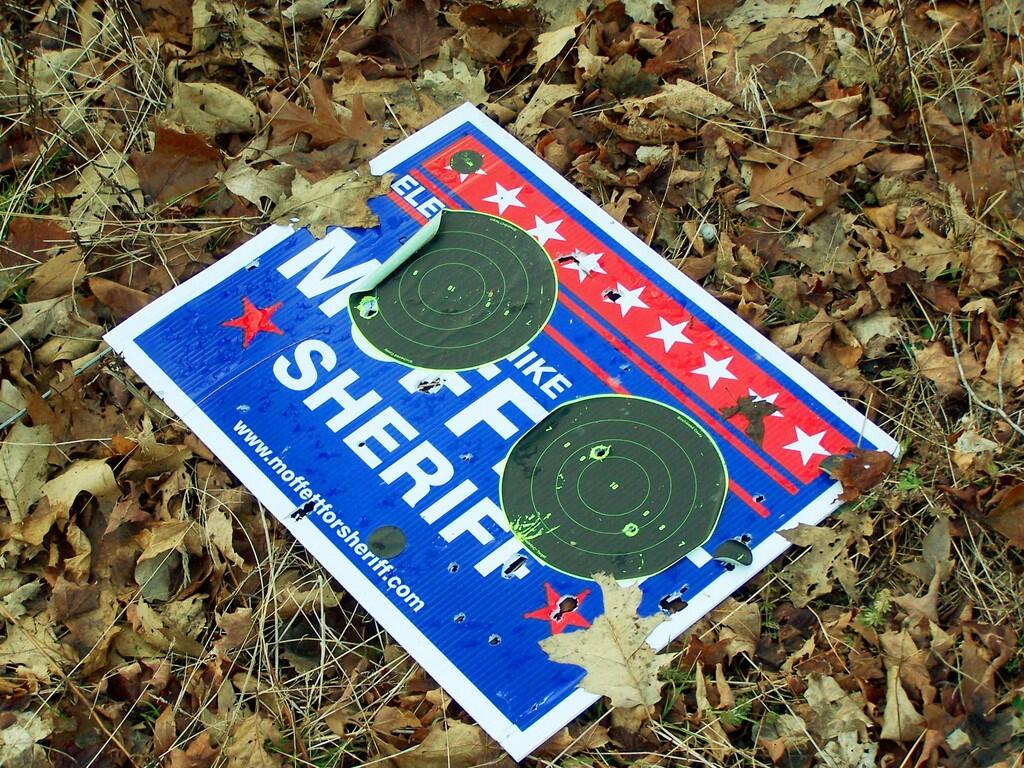
After every election day millions of these lawn signs end up in landfills, incinerators and burn piles . That is the signs that don’t blow away, end up in the woods mixed with the mud and urban debris. All for nothing. Political signs are not effective method of campaigning for political office.


![Thematic Map: 2024 Presidential Election - Capital Region [Expires November 1 2026]](/data/photo_17216_small.jpg "Thematic Map: 2024 Presidential Election - Capital Region [Expires November 1 2026]")





1 Comment
Regarding your contention that lawn signs have no first amendment protection”….WRONG.
The U.S. Supreme Court has ruled that the display of political and other types of signs on residential property is a unique, important, and protected means of communication and towns cannot restrict the display of such signs.
City of Ladue v. Gilleo, 512 U.S. 43 (1994), was a free speech decision of the Supreme Court of the United States. It was a case challenging the legality of a city ordinance restricting the placement of signs in the yards of residents of Ladue, Missouri.
Reed v. Town of Gilbert, 576 U.S. 155 (2015), is a case in which the United States Supreme Court clarified when municipalities may impose content-based restrictions on signage. The case also clarified the level of constitutional scrutiny that should be applied to content-based restrictions on speech. In 2005, Gilbert, Arizona adopted a municipal sign ordinance that regulated the manner in which signs could be displayed in public areas. The ordinance imposed stricter limitations on signs advertising religious services than signs that displayed “political” or “ideological” messages. When the town’s Sign Code compliance manager cited a local church for violating the ordinance, the church filed a lawsuit in which they argued the town’s sign regulations violated its First Amendment right to the freedom of speech.
Writing for a majority of the Court, Justice Clarence Thomas held that the town’s sign ordinance imposed content-based restrictions that did not survive strict scrutiny because the ordinance was not narrowly tailored to further a compelling government interest. Justice Thomas also clarified that strict scrutiny should always be applied when a law is content-based on its face. Justice Stephen Breyer and Justice Elena Kagan both wrote opinions concurring in the judgment, in which they argued that content-based regulations should not always automatically trigger strict scrutiny. Although some commentators praised the court’s decision as a victory for “individual liberty”,[4] other commentators criticized the Court’s methodology. Some analysts have also suggested that the case left open several important questions within First Amendment jurisprudence that may be re-litigated in future years.