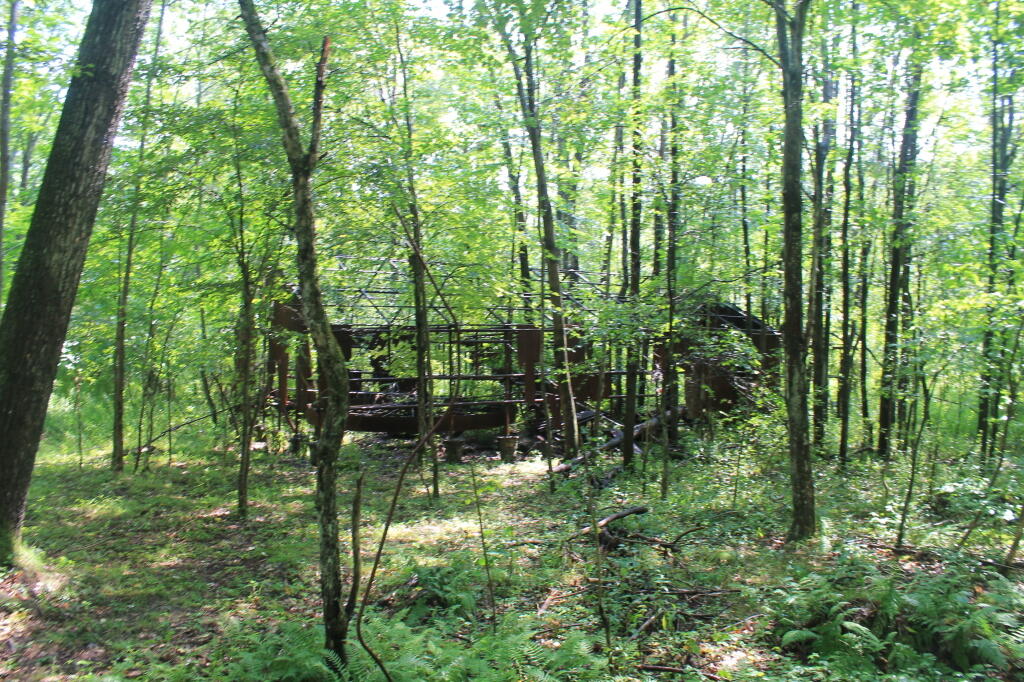
Warmed up nicely by mid morning. But I got up much too early after staying up to late. Early to bed tonight and early tomorrow to head down to Bramley Mountain for a hike. Then maybe some of the Catskill Scenic Trail on the mountain bike. Maybe swing by the John Burroughs Historic Site and back to Mine Kill for another quick swim depending on the time. Didn’t blow up the tube for swimming in the Schoharie Creek or do any bike rides, kind of just a tired, lazy summer day.
My gawd that traffic was awful getting out of Albany 🚗 🚓 🚃 🚚 🚗 🚓 🛻
I saw that there was an crash on I-90 on Waze before leaving work and thought about taking the local roads out to Schoharie but thought how bad can it really be? Famous last words as they say.
It was so bad, me trying to be uber cautious, you know driving a still almost brand new 2026 SuperDuty. 💥 But once I got onto the ramp to I-88 I breathed a sigh of relief. One thing that was nice when I had to get over from a nearly stopped lane of traffic near the Schenectady exit, that 6.8L SuperDuty engine can really move if you give it a lot of $4.15 and rising gas. ⛽
The SuperDuty is almost boring on I-88, as the big block doesn’t really struggle the least bit on the rolling hills heading through Delanson and down to the Schoharie Valley. 🚛 Darn thing has so much power and pumping losses, it basically never shift or feels like it’s accelerating or slowing, it just cruises along at a very even 67 MPh or whatever I set the cruise control to without even really going above or below that or shifting gears at all. ⚙️ It’s so nice climbing the hills with ease, and even better going down the steep mountains not having to downshift or worry about the brakes. The transmission automatically downshifts even in normal mode, and those big F-350 disc brakes really feel good and strong all the way down. And if I got them too hot, I’m sure the SuperDuty would warn me of such things. But remember, the truck is built to tow 7 tons if neccessary.
It’s good to get back to Betty Brook Campsite. 🏕️ Hard to believe it was 21 years ago when I first camped here in early summer 2005, after I drove down to Oneonta to look at potentially transferring to that college. I ultimately chose Plattsburgh, but I’ve been coming out here for many years now. Not much has changed over the years, though the Ford Ranger I had back in the day is long gone, Big Red is retired, and now I have the SuperDuty. I remember listening to Obama’s DNC speech out there in 2008, the night before the burn ban took effect in 2009 and people calling in sighing on WGNA – no more bonfires were told. 🔥 Burned a lot of shit since then but don’t tell a liberal.
Finished off the summer squash with eggs and salsa this morning. Had a bunch of coffee, ☕ for some reason I was up at 5;30 AM, had some of that new strong weed, smiling, happy thoughts but yeah, I’m going to hang out at camp for a while before heading over to Looking Glass Pond for a walk and maybe some fishing. 🎣 I do think I want to do Vromans Nose, maybe go for a ride along NY 30, maybe float in the Schoharie in the tube 🏊♂️ and certainly before mid-afternoon head down to Mine Kill and stroll around the grounds before going for a swim. Then back to camp. I do also want to stop at Shauls
It was a cool night. ❄️ By the time I got up to Summit last night it was 65 degrees, and certainly by darkness in camp it was in the fifties. Big fire for a while with the disgusting amount of burnables I sent up in smoke, 🔥 it was good I kept the trash bag so I could use in the bucket 🪣 shitter 💩 as I forgot to bring extra garbage bags. Laid back in the hammock, finished off The Crazies, a book about a proposed wind farm on ranch land in Montana that divided a community, thanks to wealthy neighbors and others who were concerned about the scenic and wildlife impacts of a wind farm in their area. Great story about small town life and the sometimes divisive nature of wind farms.
This morning, taking it slow, went for a little stroll in the hammock and listening to J. D. Vance’s Hillbilly Elergy. 🤠 It seems like only yesterday I was reading it – truth was it was probably 2018 or 2019 at this point – long before he was Senator or Vice President but I keep seeing it on Libby and decided to check out the audio book and listen it again. I mean it’s pretty consistent with what I’ve heard about Appalachia in the past, sounds like many of the poor country folk I know – farmers, folk who live in the small towns. 🧑🏻🌾 When it warms up a bit and I sober up, I’ll head over to Looking Glass Pond ☀️ but I’m just enjoying the morning sun for now, it’s day off, good to take it slow. 🦥


Oil Hits $100 a barrel again 🛢️
Crude oil prices are surging past $100 per barrel, erasing a brief summer decline and driving the U.S. national retail gasoline average back above $4.00 per gallon. Renewed geopolitical conflicts, supply bottleneck uncertainties, and seasonal refining constraints are combining to create a highly volatile energy market as the summer winds down. [1, 2, 3, 4]
Understanding Today’s Oil Price Surge
Global crude benchmarks have hit their highest marks in nearly two years. [1]
- Current Benchmarks: Global oil prices have spiked to $100 per barrel, with Brent crude trading above $88 and international markets highly strained. [1, 2, 3, 4]
- The Strait of Hormuz Flashpoint: Renewed military tensions between the U.S. and Iran have disrupted shipping lanes through this vital passage. Roughly 20% of the global oil supply transits this waterway, and security risks are forcing tankers to divert or face long delays. [1, 2, 3]
- Refinery Attacks: Ongoing Ukrainian drone strikes targeting Russian oil refineries over the last six weeks have heavily knocked out refining capacity, tightening global fuel supply. [1, 2]
How Oil Spikes Impact Your Local Pump
Crude oil represents the baseline expense for everyday fuel, dictating consumer costs through a direct mathematical translation. [1, 2]
- The Cost Foundation: Crude oil makes up over 50% to 60% of the total retail cost of a gallon of gasoline. [1, 2]
- The “2.4-Cent” Rule: Historically, every $1 fluctuation in the price of a barrel of crude oil yields an immediate 2.4-cent change per gallon for consumer gasoline. [1]
- Refining and Seasonality: Extreme summer heat waves have forced domestic refineries to reduce operational output to prevent equipment failure. This capacity crunch is compounded by the mandated use of expensive summer-blend fuel, which adds 7 to 10 cents per gallon to production overhead. [1, 2, 3]
The Outlook: August into Labor Day
Analysts and economists are deeply divided on whether the market will experience late-summer relief or an unprecedented pricing crisis heading into the holiday weekend. [1, 2, 3]
The Bearish View: The $6.00 Worst-Case Scenario
- Energy economists, including Ed Hirs from the University of Houston, warn that the pain at the pump is just getting started.
- Continued escalations in the Middle East and prolonged blockades could trigger massive demand destruction.
- Analysts give a “coin-flip’s chance” that gasoline could rally to $6.00 per gallon by Labor Day. [1, 2, 3, 4, 5]
The Bullish View: The Seasonal Cool-Down
- Petroleum analysts like Patrick De Haan from GasBuddy suggest that the second half of summer historically brings a build-up of fuel supply. [1]
- If geopolitical “headline shocks” fade, gasoline prices typically face downward seasonal pressure in late August as driving demand hits its annual ceiling. [1, 2]
- Some analysts maintain that barring a catastrophic hurricane season in the Gulf of Mexico, gas prices could see a significant drop right around Labor Day weekend. [1, 2]
The Wildcard: Hurricane Season
- Market tracking groups like AAA note that late August is the peak window for severe Atlantic tropical storms.
- Even a temporary threat of hurricane-force winds in the Gulf of Mexico will force offshore platforms and coastal refineries to preemptively shut down, sending a massive shockwave through regional supply lines. [1, 2, 3]


Very Old Powerhouse
Probably from the boom-era of Petroleum Center, powered by natural gas. Modern wells are electrically powered.
Friday July 27, 2012 — Notes — Alma Pond 🗺 — Dobbins Memorial State Forest 🗺 — Little John Wildlife Management Area 🗺 — Otter Lake 🗺 — South Hill State Forest (Oneida 23) 🗺 — Summer Hill State Forest 🗺— PDF with All Maps 📚