Big Red 📍

🖼️ Photos 📽️ Videos

May 17, 2018 8:21 pm Update

Solar panel mounted on my truck, but I still need to run the wires and hook up the fuse. I estimate it will do about 4 amps in bright sun or about 50% output due to lack of a perfect angle. The panel is 100 watt or 8.5 amp but we don’t have that kind of sunshine outside of laboratory.

Unless it’s a bright sunny day, parked in the sun all I probably won’t be able to get the accessory battery to full charge this way, but combined with the alternator running while driving, I should easily be able to get close to 100% most days camping after a 15-30 minute drive plus a few hours parked in the sun.

Map: Hays Brook Horse Trails

My Low Voltage Battery Protective Relay

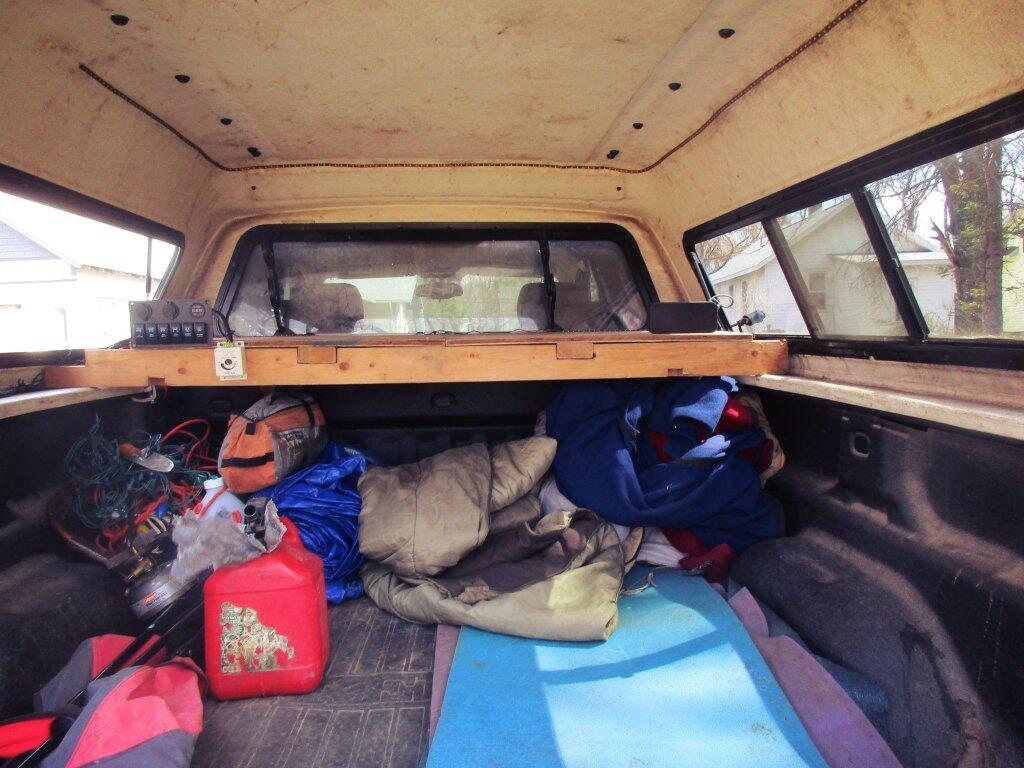
Since April, I have added a voltage-activated low-voltage battery disconnect relay that I sometimes refer to as a “protective relay” which protects my truck’s accessory battery from overdischarge. While the accessory battery when discharged doesn’t impact the starting battery (much), it does ruin the accessory battery chemistry by causing the battery plates to sulfurize and warp. Only one or two extreme discharges can greatly reduce the maximum charge and discharge of the battery – even with deep cycle battery that I use for accessories.

While wiring the optional reset switch was a bit confusing, the relay itself was quick and easy to wire. It monitors voltage on the wire going from the battery to all loads inside the truck and in the cap, and when the voltage dips below 12.1 volts for more then 30 seconds, it drops all loads. While this leaves the truck cap and lights running off the inverter dark, 30 seconds after I start the truck and start charging the battery, the relay resets and connects the load. The relay resets when the battery voltage rises above 13.5 volts for more then 30 seconds. This gives the battery a chance to start charging before a load is connected to the system, and minimizes stress on the truck’s electrical system.

It seems to work well at protecting the battery and avoids the annoying chirp of the inverter at low voltage. I like how it works without further action on my part, and I don’t have to worry about monitoring battery voltage to avoid overdischarging the battery while camping. Moreover, it automatically resets about 30 seconds after I start the truck, so I don’t have to go digging around to find a reset switch.

The model I got was $50 from Cabella’s. There are other models out there, but this model has an integrated relay and has an easy to use voltage cut off adjustment and reset button, and automatically resets. So that’s what I use.

Map: Severence Hill Trail

Thinking About Getting Fenders on the Truck

One of the other problems I have with my lifted truck is it’s constantly getting covered with mud, dirt and in the winter with salt. In the winter, the salt often gets so caked on the windows, it can be hard to see out of them. I can wash it, but just going through a mud puddle on a dirt road gets it’s soaked. It also seems like I end up throwing a lot of stones, and I’m chipping the paint in places, and a few times I’ve had stones hit windows – but so far none of them have broke.

Right now, the tires on my truck, after lifting it, stick out from the body. Rather then much of the thrown gravel, rocks, and mud hitting the wheel well, they go fly out from the truck. Installing aftermarket wheel fenders would help with that. I’ve never been that much of a fan of the aftermarket fenders, as I think they are kind of ugly, but they would keep rocks, salt, and mud from being thrown.

It also would make the truck legal in many more states. New York doesn’t require wheel fenders on lifted trucks, you can have the wheels stick out form the body. That isn’t true in some other states, namely Maryland, which I have to go through to get to West Virginia. Sure, they’re aren’t a lot of cops looking for that, and if you not speeding, chances of getting pulled over are small. And it’s only like 10-20 miles to cut through that state.

One of the wheel wells has started to get some salt rot, like all GM trucks do after a while. There is just this spot over the rear wheels in the truck bed, that there is no good place to clean the salt and mud off of, and over time, it eats from the inside. It’s not so noticeable right now, but it will get worse over time. Fenders would cover the rust, and make the truck look sharp for a lot longer. Plus control the mud and salt that covers the outside of the body.

But the salt and mud covered windows are a real pain. I hate seeing the rust on my nice truck. I’ve looked online, and I can get a nice set of the fenders for about $150, and if I order out of state, I can probably avoid paying sales tax, not that I would dare to forget to tell the state about my expenditure. Or I could see what one of the local performance shops would charge to have them bought there and installed – that would ensure they were installed nice and straight. I’m not crazy about drilling my own holes through the quarter panel – there is no turning back if you screw up yourself.

I think I will decided by mid-autumn what I want to do. I want to have fenders on the truck before winter if possible, to keep the salt from coating my truck nearly as badly as it normally does in the winter. I want to not find myself cleaning off the windows so I can see where I am driving in the winter.

Map: Floodwood Pond Loop
Terrain Map: Peebles Island Terrian