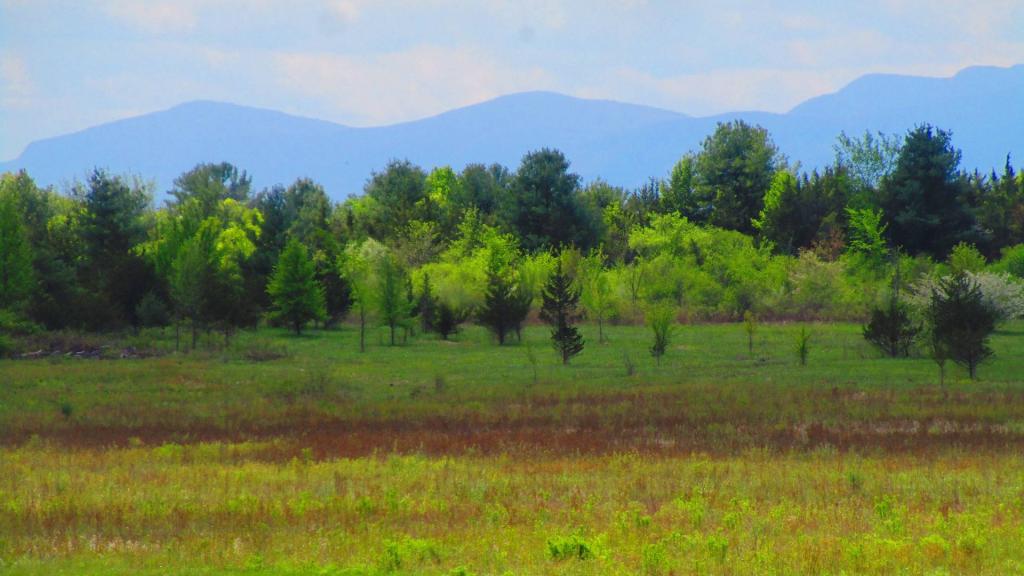
Across the Brickyards Property Towards the Catskills


Charles Flood (1938–2015) was an investment manager and philanthropist whose dedication to conservation helped purchase and led to the protection of a 590-acre former industrial, now known as the Charles Flood Wildlife Management Area at the Empire Brickyard.
Founded in 1902, the Empire Brickyard utilized the massive clay deposits left behind by Ice Age glaciers. The Empire Brickyard closed by 1940, primarily due to the exhaustion of local clay deposits. The broader industry declined shortly after because bricks were not considered an essential item for the war effort, leading many plants to shutter permanently. In addition, the rise of concrete and steel construction in the late 1920s reduced the demand for traditional molded bricks.
The area was saved from becoming a landfill in the 1980s. Following the closure of the Empire Brick Supply Company in the mid-20th century, the abandoned site—rich in clay and located along the river—became a target for landfill development in the 1980s. The effort to block the landfill was spearheaded by “passionate locals” who recognized the ecological value of the riverfront and the potential risks of waste seepage into the Hudson River.
Opponents argued that the site’s unique geography, including sensitive wetlands and its proximity to the Stockport Creek, made it entirely unsuitable for large-scale waste disposal. The defeat of the landfill project in the 1980s paved the way for the land’s eventual conservation. In 2015, the property was protected with the support of Scenic Hudson, and since 2019 is managed by the NYS Department of Environmental Conservation as the Charles Flood Wildlife Management Area.