The truth is …. 60 Hz Alternating Current Kind of Sucks
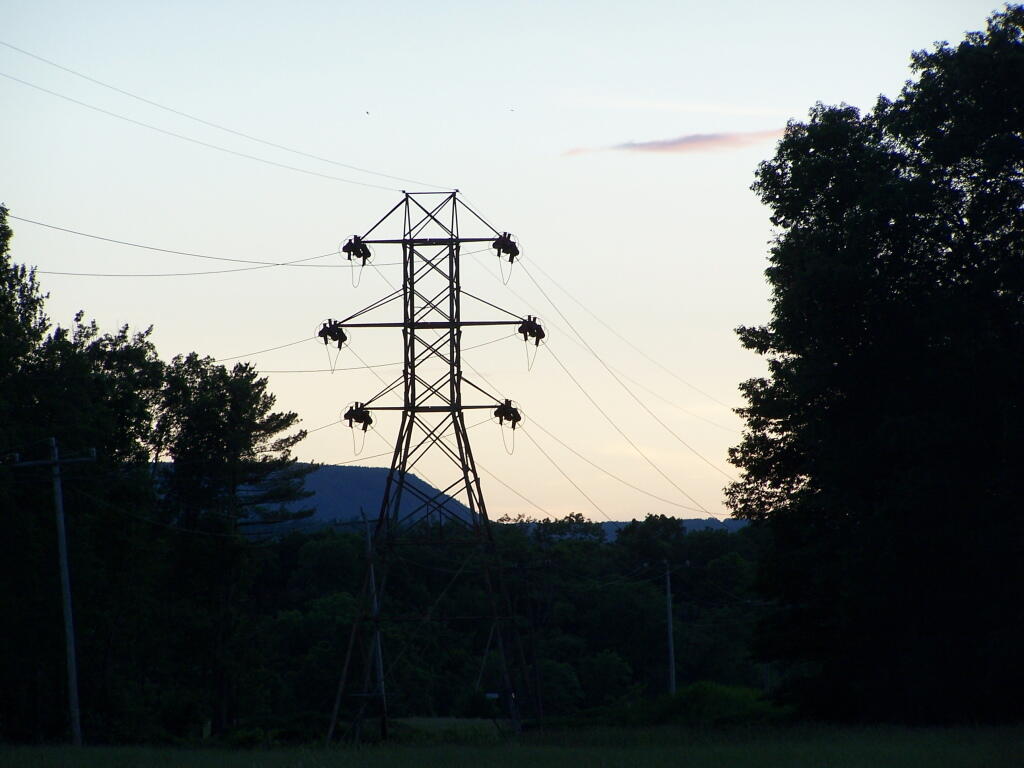
In North America, 60 Hz is the standard of alternating current. It was a rather nasty compromise between frequencies, chosen as a “sweet spot” between:
- Line losses due to high-frequency currents – The higher the frequency of AC the greater loses due to impedance caused by the voltage and current becoming out of sync due to the induction created by the line (time it takes for the magnetic field to appear and collapse on the wire). It’s not practical to send 400 Hz over any length of wire due to losses.
- Size of the transformer needed to step and step down voltage – The higher the frequency of AC, the smaller the transformer needs to be. The magnetic energy in alternating current “exists” in the alternating voltage, so if the voltage is alternating faster, a small transformer can move more power. Smaller transformers use less copper, they’re cheaper to build, and they’re generally more efficient.
- The ability to power light bulbs with minimal smoothing. Incandescent bulbs can be powered directly from 60 Hz alternating current, as it takes more then 1/60th of a second for an incandescent bulb to cool down enough to notice the crossing of zero point. Additionally, with 60 Hz power, a relatively small capacitor can be used to smooth out rectified power to drive an LED light, for fixtures that use a large number of LEDs in series.
- The ability to power low-power AC motors. 60 Hz alternating current can and does drive many AC motors, but it does require relatively large motors compared to motors operating at 400 Hz. Not only do 60 Hz alternating current motors require much larger coils then 400 Hz motors, they are less efficient.
Airplanes traditionally use to 400 Hz power, as it saves quite a bit on weight for their electrical motors and transformers. Likewise, traditional automotive alternators generate power in the 400 Hz range, before going through a bridge rectifier and a series of capacitors to smooth out the voltage to direct current. But transferring 400 Hz power, or for that matter boosting and bucking high-current DC can be difficult and prone to electronic failure compared to traditional mains frequency transformers.
But increasingly, we are seeing more uses of high frequency alternating current and direct current, especially in consumer devices. Most modern electronics are powered by switch-mode power supplies, which use high-frequency transformers (as high as 1,000,000 Hz) to safely step down voltage in an isolated fashion. More motors today are driven using inverters, which similarly create a higher-frequency current to provide more power with loss copper and less losses. Controlling the frequency of the current, allows motors to be precisely controlled in their speed, it’s more efficient and accurate then simply chopping off part of the sine wave using thyristor as was done in the olden days to control motor speed.