
Materials and Waste 📍

🖼️ Photos 📽️ Videos

Cuomo seeks to ban single-use Styrofoam food containers, packing peanuts in New York State

Cuomo seeks to ban single-use Styrofoam food containers, packing peanuts in New York State

Governor Andrew Cuomo announced one of the proposals in his 2020 State of the State Agenda on Tuesday, and it could have an effect on restaurants, grocery stores and the shipping industry.

The proposal seeks to ban the distribution and use of single-use Styrofoam, also known as expanded polystyrene. The material is used to create food containers commonly used by restaurants, delis and food trucks for takeout meals. Grocery stores use it to package eggs, fish and raw meat. It's also used to make packaging materials like packing peanuts.

Under the proposed legislation, the New York State Department of Environmental Conservation would also be given the authority to limit or ban the use of other packaging material based on its environmental impact.

Seems like a good idea. 🤔While I used to use a lot of Styrofoam plates and dishes 🍵 up at camp -- I've switched over to paper because it's almost as cheap, doesn't melt with hot food, and I was reading how nasty some of blowing agents are for the environment -- and honestly Styrofoam kind of burns black and smells bad when you toss it in the fire, if the fire ain't roaring. 🔥
All Sights on Mexico as it Discovers World’s Largest Lithium Deposit

All Sights on Mexico as it Discovers World’s Largest Lithium Deposit

The report indicates that the lithium mine located in Sonora is the largest deposit with proven and probable reserves of 243.8 million tons, containing 4.5 million tonnes of lithium-carbonate equivalent.

Construction of the mine was first announced by Sonora Governor Claudia Pavlovich in May 2018 and is expected to be completed in the first quarter of 2020.

Production capacity in its first stage of operations is expected to be 15,500 tonnes per year of lithium carbonate, Mining Technology said, while capacity will double to 35,000 tonnes per year in a second stage.

The mine is being developed by Canada’s Bacanora Minerals and China’s Ganfeng Lithium.

Ever Hear of a Nurdle? This New Form of Pollution Could be Coming to the Ohio River – The Allegheny Front

Ever Hear of a Nurdle? This New Form of Pollution Could be Coming to the Ohio River – The Allegheny Front

hen the petrochemical plant being built by Shell Chemical Appalachia in Beaver County is complete, it’s anticipated to bring 600 jobs as well as spinoff industries. But some researchers and activists warn that it could also bring a new type of pollution to the Ohio River Valley — nurdles.

New York’s Thick Plastic Bag Demands Vex Efforts to Reduce Waste

New York’s Thick Plastic Bag Demands Vex Efforts to Reduce Waste

New York, joining California, aims to ban most single-use plastic bags under a measure that takes effect March 1, 2020. But the state’s first crack at implementing it has drawn the ire of the environmentalists and one of the law’s sponsors, who say the Department of Environmental Conservation’s proposed rules have too many loopholes even as plastics makers say they can’t meet the state’s demands.

Several states have eyed plastic bag restrictions as one way to curb plastic waste, but New York—which goes through approximately 23 billion single-use plastic bags annually—is raising eyebrows for demanding thicker reusable bags. While California set the minimum thickness for acceptable bags at 2.25 mil, New York wants its bags 10 mils thick. A mil is one-thousandth of an inch.

It’s impossible to produce plastic bags that thick, and there aren’t enough paper bags to fill the demand from the populous state, Phil Rozenski, vice president of public affairs for North Carolina-based Novolex, which manufactures paper and plastic bags, said.

The dark side of electronic waste recycling

Jim Puckett got the messages from his “little lie detectors.” They were small devices, not much bigger than a deck of cards. Being GPS trackers, they also didn’t look much like actual lie detectors. For years, as the head of the Basel Action Network, Puckett and his team have been throwing them in the trash.

Electronics can be hazardous when disposed of improperly, and the Basel Action Network, or BAN, investigates the underground world of the e-waste trade. The nonprofit group secretly embeds trackers in discarded devices, then hands them to recyclers to see where they end up, exposing bad practices in the process. After dropping bugged LCD monitors in Oregon, they followed along as the trackers traced a circuitous route through the summer of 2015 and into the fall.

Read more on the The Dark Side of Electronic Waste Recycling on the Verge.

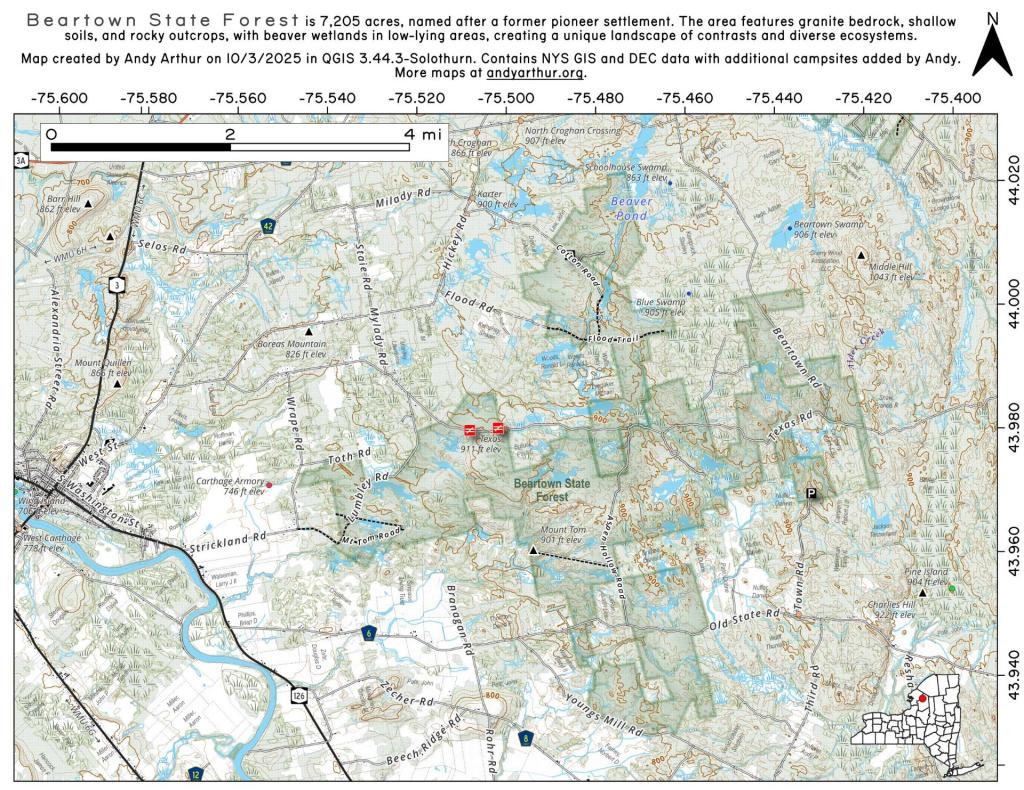
Map: Beartown State Forest