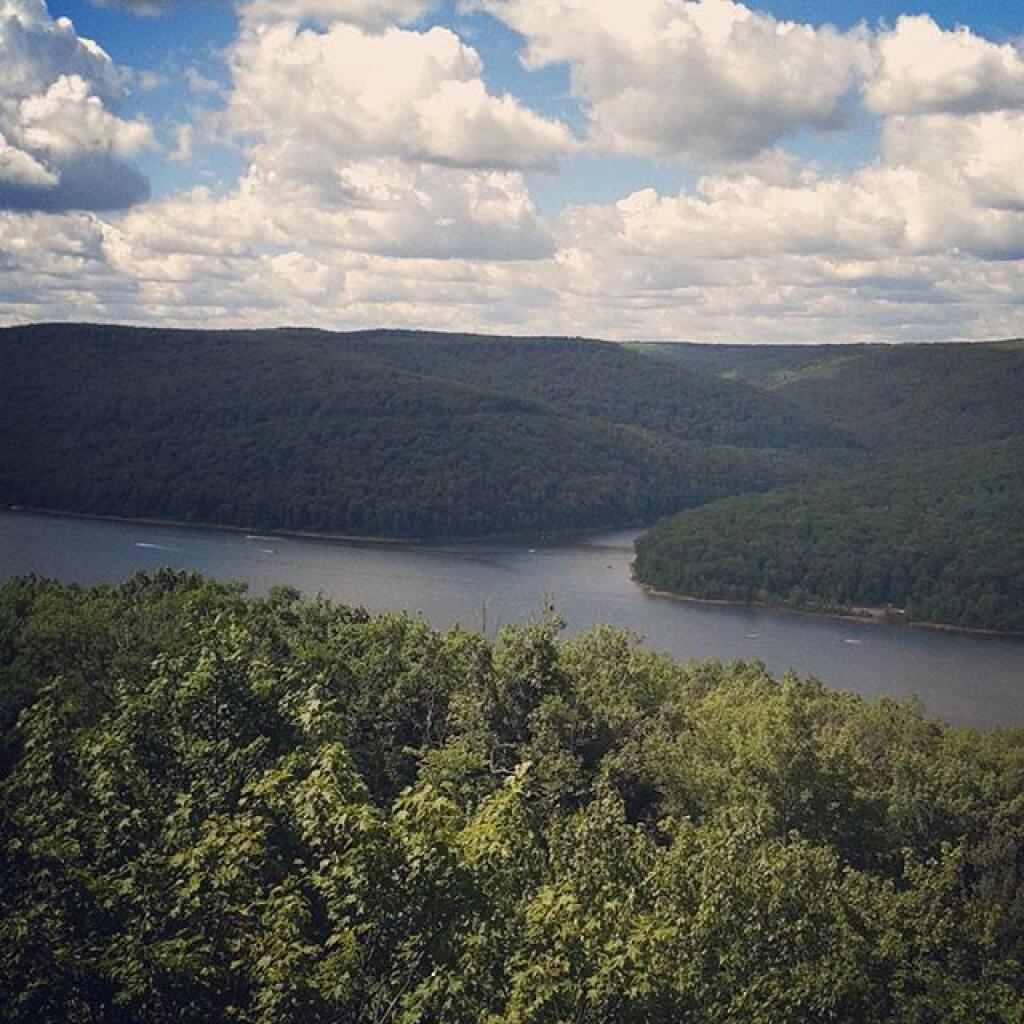

Allegheny National Forest 📍

The Forest Service brought new concepts in forest management to the Allegheny Plateau — multiple benefits and sustainability. The Organic Act of 1897 introduced the National Forest mission: to improve the forest, provide favorable conditions for water flows, and furnish a continuous supply of wood to meet people’s needs. On these lands, seedlings for tomorrow’s forest are the focus of forest management activities. Watersheds are managed to ensure clear water for fisheries like trout and clean drinking water for all.

Over time, various laws added other benefits like wilderness, heritage resources and grazing to the original ideas of watershed protection and continuous wood supply. The Multiple Use-Sustained Yield Act of 1960 recognized outdoor recreation and habitat for wildlife and fisheries.

The motto “Land of Many Uses” captures the National Forest goal of a healthy, vigorous forest that provides wood products, watershed protection, a variety of wildlife habitats and recreational opportunities — not only for us today, but in a sustainable way so future generations can enjoy these benefits, too.

http://www.fs.usda.gov/allegheny/

Map: Estimated Firearm Ownership Percentage
Map: Andersen Hill And Potato Hill State Forest

Sugar Run

Greatly widened with the creation of the Allegheny Reservoir. 

Thematic Map: Acres of Land Developed between 2001 and 2016

Kinzua Before Flooding April 1964

Roughly 10,000 acres of farmland and several small villages including the Cornplanter Tract would be forever flooded after completion of the Kinzua Dam on December 13, 1965. This picture of Kinzua a year before shows the demolition of most of the village and the construction of the James Morrison Kinzua Bridge in April 1964.

Kinzua Before Flooding April 1964

Map: Floodwood Pond Loop