Materials and Waste 📍

🖼️ Photos 📽️ Videos

Planet Money : NPR

Why have we all been recycling plastic for 40 years? : Planet Money : NPR

Last year, Planet Money ran a show about why it doesn't make sense economically and, heartbreakingly, even environmentally to recycle plastic. But if recycling most plastic is not working now... and it didn't work 30 years ago when the numbers and arrows first popped up... did it ever work? And why did it take us so long to learn the truth? Today on the show, NPR reporter Laura Sullivan, with the support of PBS's Frontline, sets out to find out who is responsible.

So, No Plastics Aren’t Biodegrable

A common criticism of many plastics is that they are not biodegradable – if you drop a plastic water bottle on the ground it’s not going to be eaten by bacteria and other wildlife and rot away to be soil. The bottle will last on the ground indefinitely, unless it’s pick up off the ground by a human or animal, subject to mechanical or ultra violet degradation or burned in a fire, bonding the carbon atoms in the plastic to oxygen to become carbon dioxide.

I’ve always thought this to be somewhat silly criticism — as many things said to be biodegradable do not actually biodegrade in the environment they are disposed of. Many so-called biodegradable things like paper are imprinted with toner, which is a mixture of plastic and black carbon. In other cases, the environment is too dry or oxygen deprived to allow for biodegradation like compressed inside of a landfill.

Moreover, many products that are made of so-called natural materials, rather then plastics, come with a significant ecological cost because they have to be raised and harvested. It’s not saying that they are better or worse — it’s just pointing out that there is no free lunch in trying to reduce impacts by switching to natural and biodegradable products, even if they are just going to ultimately end up in the landfill.

Reducing toxicity of products consumed and discarded is more important, as is reducing the volume of products consumed and discarded. Promoting bottles and cups that can be washed is vastly superior to any natural or biodegradable product. If you get more use out of it before the landfill, the incinerator, or the burn barrel, the better for the environment. It’s just that simple.
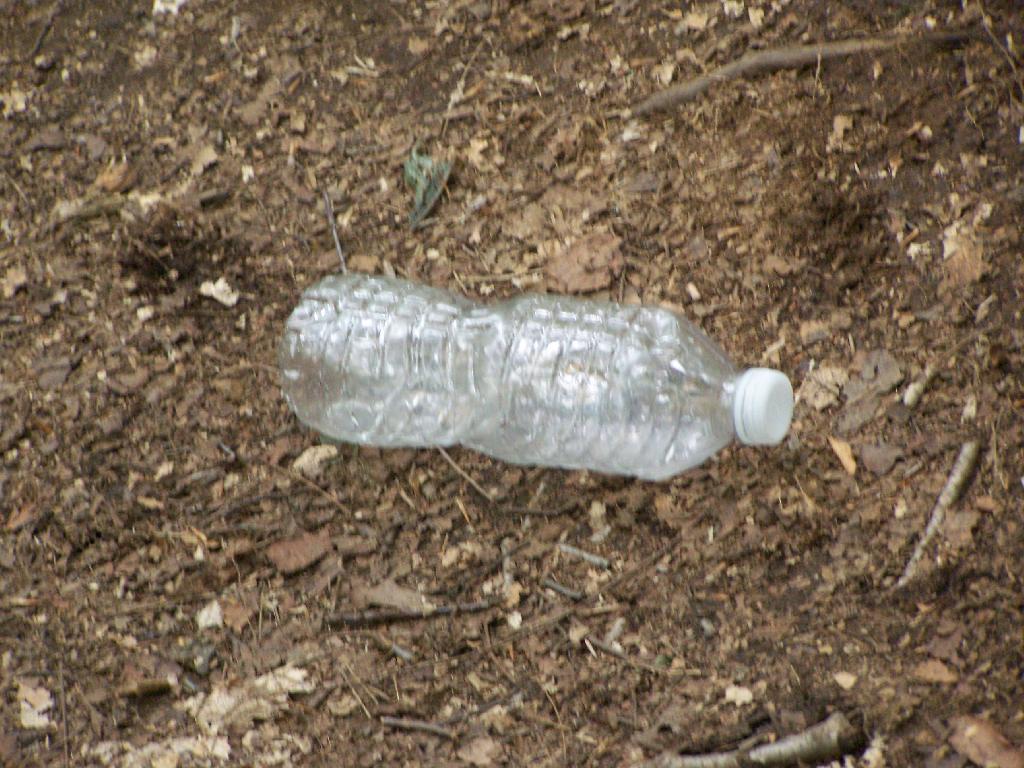

Plastic Bottle Litter

Scientists Find Bacteria That Devours Cancer-Causing Pollutants

Scientists Find Bacteria That Devours Cancer-Causing Pollutants

While they were trying to find ways to clean the Passaic River Superfund site, a team of scientists discovered a new bacterium that might be able too do some of the heavy lifting on similar sites.

The bacteria was found thriving in toxic mud at the bottom of the river, where it was happily munching away on cancer-causing and otherwise dangerous toxins called dioxins, according to research published in the journal Environmental Science & Technology. By giving it a little boost, the Rutgers scientists believe they could set the bacteria to work cleaning up the Passaic River and other toxic waste sites around the world.

Picky Eater Specifically, the bacteria pluck chlorine atoms out of Tetrachlorodibenzo-p-dioxin, regarded as the most toxic dioxin out there. Without its chlorine atoms, the dioxin, which is a byproduct of chemical manufacturing plants that operated in the area, becomes far less dangerous.

“Our results showed that although the process is quite slow, it can be enhanced and may even have the potential to remove all toxic chlorines from the compound,” Rutgers Ph.D. candidate and lead author of the new research Rachel Dean said in a press release.

Tools Of The Trade Dean and her team are now hoping to figure out what’s going on at the molecular level when the bacteria strip the dioxin of its chlorine atoms.

By identifying what enzymes are responsible, Dean and her colleagues are hoping to develop a chemical treatment that neutralizes the dioxins at other waste sites.