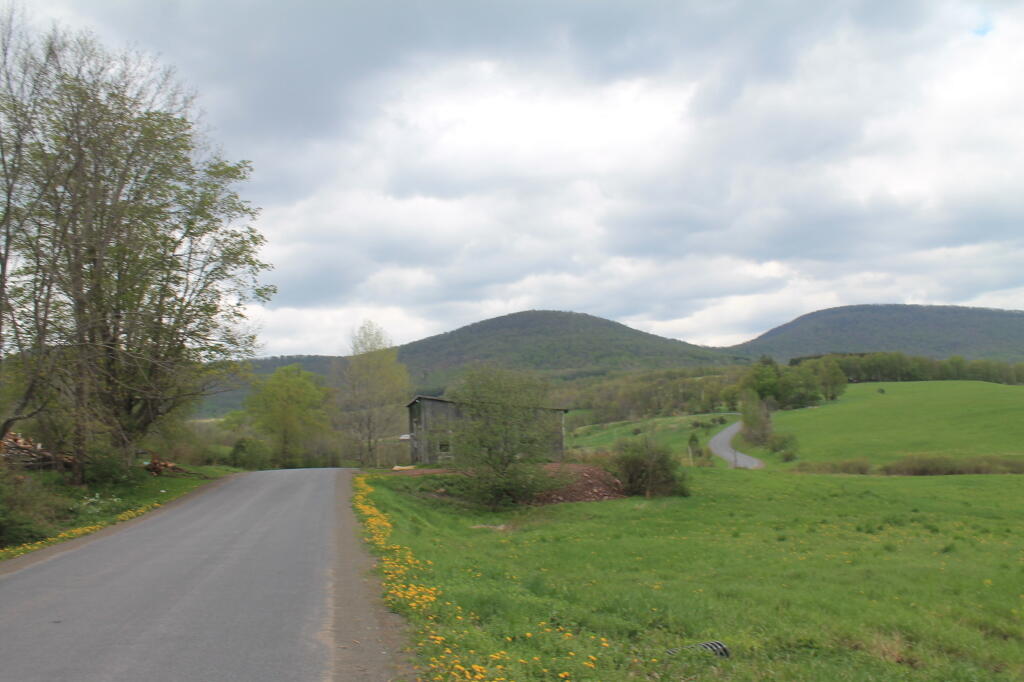
Further Down Burroughs Memorial Road
Gods Country.
Saturday May 17, 2014 — Delaware CountyGods Country.
Saturday May 17, 2014 — Delaware CountyWhen Louisiana voters cast ballots on Saturday, Senator Bill Cassidy’s political demise could be hastened by a decision his fellow Republicans made two years ago: getting rid of an open, nonpartisan primary in favor of a closed system in which Republicans and Democrats compete separately.
That nonpartisan primary was adopted, in part, to empower politicians like Mr. Cassidy who have been willing to cross party leaders and reach across the aisle. Supporters of open primaries and political scientists who have studied them say they increase voter participation and elect more middle-of-the-road candidates.
Across the country, partisans are turning against such systems. In response, supporters are intensifying their advocacy with an even bigger claim, based on research commissioned by open primary proponents: Open primaries may better people’s quality of life in tangible ways that include increased prosperity, longer lives and lower murder rates.
I am quite the traveler. I’ve been to Peru, Cuba, Poland, Russia, Bagdad, Ohio, Paris, Rome, Bethlehem, Bolivar, and Cairo.
I’ve been to Bliss and to Freedom. Driven past the turn for Podunk, but I’ve never been to Podunk.
Also been to Bliss. And I didn’t even have to leave New York State. But then again, I’ve driven through Manhattan many times on US Route 6 in Pennsylvania, and camped only like five miles from Manhattan on the Painter Run.
The marshy Middle Sprite Creek below the beaver dam on Hillabrandt Vly.
Saturday May 11, 2019 — Notes1.2 mile leg-stretcher hike, easily accessed from US 9, just south of Exit 28 Ticonderoga on the Adirondack Northway. Good views of Paradox Lake and Schroon Lake from this mountain. Trail goes under the Adirondack Northway in a culvert.
Partisan politics lately seems to be dominating our political discussion, with political leaders often fighting for what they believe is best for their political party, then what is right for a country. Some people have gone as far as to suggest the current incumbent in the White House, President Trump is taking it to it’s extreme, hypercharging partisanship, weaponing the rules of democracy and law to benefit his most loyal supporters and his party. The term people use to describe such things is Competitive Authoritarianism.
Competitive Authoritarianism is a hybrid regime type where formal democratic institutions—such as multiparty elections—are the primary means of gaining political power, but systematic government abuse skews the playing field so heavily against the opposition that the system cannot be labeled a true democracy.
Coined by political scientists Steven Levitsky and Lucan Way, the concept emphasizes that competition in these regimes is real but deeply unfair. Unlike full dictatorships, opposition parties are legal, compete vigorously, and can occasionally win, because the incumbent lacks the absolute capacity or legitimacy to ban elections entirely. However, the ruling party tilts the scales by using state resources as a weapon against critics, violating civil liberties, and co-opting independent arbiters like the judiciary and the press.Â
Prominent political scientists—including Levitsky, Way, and Daniel Ziblatt—have increasingly argued that the United States under President Donald Trump has descended into a form of competitive authoritarianism. Commentators and scholars point to specific actions to justify this diagnosis:Â
Others reject this characterization, arguing that applying the label to Trump is inaccurate and mere alarmist rhetoric for partisan gain:Â
Ultimately hindsight is twenty-twenty. We really won’t know what comes of the actions of President Trump’s administration until it’s well in the rear view mirror. Many will prove to be overblown rhetoric, but other changes might stick. Certainly Trump isn’t afraid to use the lever of power that he has access to today.